Huel Enters the Ramen Aisle —
And the Category Will Never Be the Same
Months after Danone's $1.15 billion acquisition, Huel's debut instant ramen puts 25 grams of protein into one of the world's most ubiquitous convenience formats. It is not just a product launch — it is a declaration that functional nutrition is coming for the last remaining junk-food strongholds.
The Launch at a Glance
Huel has entered instant noodles — one of the world's highest-volume, lowest-nutrition food categories — with the launch of Huel Lite Hot and Savoury Ramen in the United Kingdom. The product debuted in three flavors: Classic "Chicken," Spicy Thai, and Sweet Chilli, with Katsu Curry Noodles to follow. A wider European rollout is targeted for late June to early July 2026, with the United States on the longer-term roadmap.
Each cup delivers 25 grams of complete plant protein, 26 vitamins and minerals, 3.8 grams of fiber, and approximately 220–230 calories — a profile that sits at the opposite end of the spectrum from the category norm. Standard instant ramen typically provides fewer than 10 grams of protein, negligible micronutrient density, and up to 1,700 milligrams of sodium per serving. Huel's entry reframes the format entirely: ramen as a nutritionally complete meal, not a sodium-loaded emergency staple. A Huel Black Edition variant, featuring 40 grams of protein, is also heading exclusively to Tesco.
Key Takeaways
- Huel Lite Ramen launches in the UK — its first entirely new product category since the Danone acquisition — with a European rollout planned by early July 2026.
- At 25g protein and 26 vitamins per cup, the product directly challenges the nutritional baseline of a $62 billion global instant noodles market growing at ~6% annually.
- The launch is strategically timed against GLP-1 adoption: over 1.5 million Britons are now on weight-loss drugs, creating acute demand for high-protein, muscle-preserving foods.
- Danone's acquisition was positioned as a GLP-1-era play; the ramen launch is the first proof point that the strategy is moving from thesis to execution.
- For MENA food manufacturers and retailers, the launch signals that functional convenience is the next frontier — and that Saudi Arabia's growing health-conscious consumer base represents an addressable market for this category.
Ramen as a Strategic Asset
The choice of instant ramen as Huel's category-expansion vehicle is not accidental. The format is globally ubiquitous, deeply embedded in consumer routine, and — critically — nutritionally underserved. The global instant noodles market is valued at approximately $62 billion in 2025 and is forecast to reach $83–99 billion by 2032, growing at a compound annual rate of 6–7%. Despite this scale, the segment has remained largely immune to the better-for-you reformulation trend that has already reshaped categories like snack bars, breakfast cereals, and ready-to-drink beverages.
That immunity is now breaking down. Major food companies including General Mills — through its Old El Paso and Totino's brands — have entered the ramen aisle in recent months, while premium Asian-influenced brands have carved out growing share with cleaner-label formats. Huel's entry is the most aggressive nutritional upgrade yet attempted in the category: moving the product entirely out of indulgence territory and into functional meal-replacement positioning.
The GLP-1 Context: Why Now
Huel's ramen debut cannot be understood without accounting for the GLP-1 moment. Searches for Mounjaro and Zepbound surged dramatically between 2024 and 2025, and more than 1.5 million people in the UK are now taking weight-loss medications — a figure that has nearly doubled in that period. For food companies, this creates both a threat and an opportunity. GLP-1 users typically eat less overall, which pressures volume-dependent categories. But they face a specific nutritional risk: the drugs accelerate muscle mass loss by 25–40% over 8–16 months, making protein intake a clinical priority, not merely a lifestyle preference.
Huel is the only brand in the convenient-meals space currently positioned to benefit directly from this shift. Its complete nutrition credentials — built over nine years of product development — map almost exactly onto what GLP-1 users require: high protein, adequate fiber (which can also trigger the body's natural GLP-1 response), controlled calories, and comprehensive micronutrient coverage. Danone, which acquired Huel in March 2026, explicitly framed the transaction as part of its response to the GLP-1 era. The ramen launch is the first product manifestation of that thesis.
"MMost people don't get enough protein, fibre, or the right nutrients. That's the problem Huel exists to solve."
Danone's Acquisition: Strategic Architecture
The Danone-Huel deal, announced in March 2026 and valued at approximately €1 billion ($1.15 billion), was one of the most consequential acquisitions in the functional nutrition space in recent years. Danone — a company with over €27 billion in annual sales spanning dairy, plant-based, water, and specialised nutrition — acquired a brand generating £214 million ($284 million) in revenue in FY2024, with profit before tax tripling to £13.8 million that year.
The strategic logic is clear: Huel offered Danone something its existing portfolio could not — a digitally native, direct-to-consumer brand with deep consumer engagement, a credible complete nutrition positioning, and a rapidly growing retail footprint spanning more than 25,000 stores globally. Under the deal structure, Huel operates as an autonomous business within Danone and continues to be led by CEO James McMaster, reporting into Danone's European leadership. The acquisition follows Danone's investments in gut-health specialist The Akkermansia Company and medical nutrition brand Kate Farms, underscoring a systematic portfolio pivot toward science-backed, outcome-driven nutrition.
"Combining Huel's range and best-in-class digital capabilities with Danone's global reach and deep nutritional expertise offers exciting opportunities into the new and fast-growing nutritionally complete space, in line with our Renew Danone strategy."
Antoine de Saint-Affrique — Chief Executive Officer, DanoneFor Huel, the acquisition provides access to Danone's manufacturing scale, global distribution infrastructure, and clinical nutrition expertise — capabilities that would have taken years to build independently and that are essential for executing an ambitious international expansion agenda.
What This Signals for the Convenience Meal Category
The Huel ramen launch marks the clearest signal yet that the functional nutrition movement is no longer content to operate in its own premium-branded lane. The next phase is category invasion: taking formats that consumers already use habitually and upgrading their nutritional profiles without asking people to change their behaviour. This is strategically more powerful than creating new consumption occasions from scratch.
Instant ramen is an ideal vehicle for this approach. It is consumed globally across all income brackets, requires minimal preparation, and carries strong cultural equity in many markets. The category's nutritional deficit — high sodium, low protein, negligible micronutrients — is widely understood by consumers yet has not historically deterred purchase. Huel's bet is that if you can offer equivalent convenience and comparable taste with dramatically superior nutrition at a competitive price point, the trade-up decision becomes straightforward.
The competitive response will be instructive. If Huel's ramen gains meaningful traction — particularly through major UK supermarket channels, where the brand already commands strong shelf presence — it creates pressure on every incumbent in the category to accelerate their own nutritional upgrade programmes. Nissin, Samyang, and the broader instant noodles establishment are not positioned to pivot quickly toward 25-gram protein cups without fundamental formulation changes.
Implications for the MENA Region
Instant noodles are among the highest-consumption packaged food categories across the MENA region. In Saudi Arabia, rapid urbanization, a young demographic skew, and a culture of convenience-driven meal occasions have sustained strong demand for the format. The Kingdom's food market — underpinned by Vision 2030's consumer-sector ambitions — is simultaneously experiencing a pronounced shift toward health-conscious purchasing, driven by elevated obesity and diabetes prevalence and growing government investment in preventive nutrition programmes.
The GLP-1 dynamic is also increasingly relevant in the Gulf. Saudi Arabia's GLP-1 receptor agonist market generated revenues of approximately $181 million in 2024 and is projected to reach $416 million by 2030, growing at a compound annual rate of 13.3% — among the highest adoption trajectories in the Middle East. As prescribing accelerates, the same nutritional imperative driving Huel's UK ramen launch — protein-dense, micronutrient-rich convenience foods — applies directly to the Saudi consumer market.
Huel does not currently have direct distribution in Saudi Arabia or the GCC. However, Danone's regional infrastructure — the company operates across MENA through established distribution and retail partnerships — provides a credible pathway for eventual entry. For local food manufacturers and retailers, the more immediate opportunity lies in identifying analogous white space: launching or stocking high-protein, nutritionally complete instant meal formats domestically before international brands arrive with the Danone distribution engine behind them.
Huel's Broader Category Trajectory
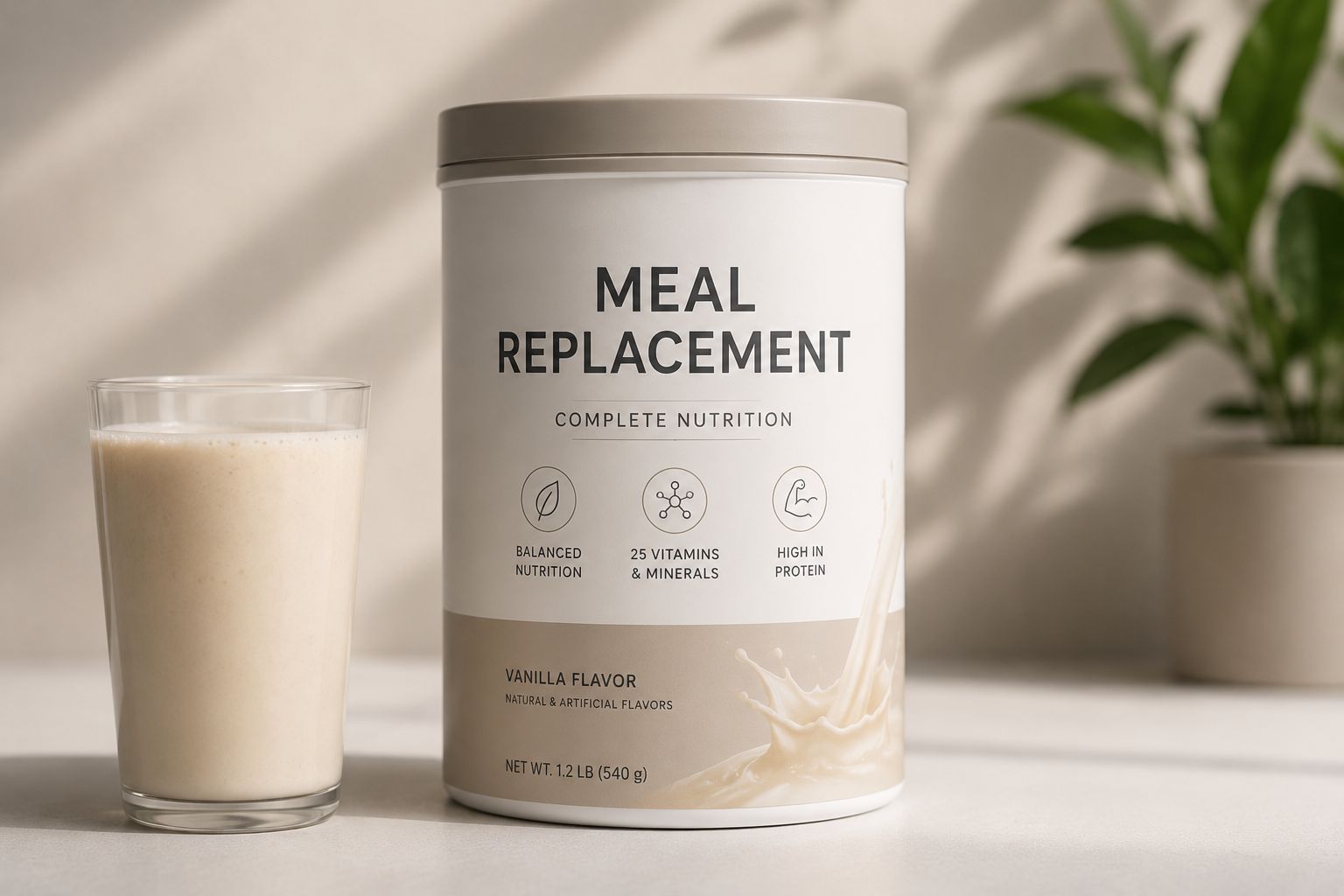
Huel was founded in 2014 as a direct-to-consumer powder brand, positioning itself as a complete meal replacement for time-poor professionals. Over nine consecutive years of revenue growth, it has expanded into ready-to-drink shakes, bars, snacks, supplements, and hot savoury meals. The ramen launch represents the brand's entry into its most mainstream category to date — a format sold at mass-market price points (£18.30 for a six-pack in the UK, or roughly £3.05 per cup) rather than the premium tier where Huel has historically operated.
This pricing discipline is significant. It positions Huel Lite Ramen as an accessible upgrade rather than a niche premium product, broadening the potential consumer base substantially. Combined with Danone's distribution scale and Huel's existing retail relationships in over 25,000 stores globally, the product has the commercial infrastructure to achieve category-level impact rather than remaining a specialty brand curiosity.
"-What they have achieved in the fast-growing complete nutrition space fully resonates with Danone's mission of delivering health through food."
Editorial View
The Huel ramen launch is more than a product story. It is evidence that the boundaries between functional nutrition and mass-market convenience food are dissolving — and that the pace of that dissolution is accelerating. Danone did not acquire Huel for its existing revenue base. It acquired the brand's positioning, its consumer trust, and its ability to make nutritional completeness feel natural in formats that were previously nutritional dead zones.
For operators, investors, and strategists tracking the MENA food sector, the critical question is not whether this category disruption will arrive in the Gulf — it will — but who will be positioned to capture it when it does. The companies that move first to offer protein-dense, micronutrient-complete instant meal formats at accessible price points in Saudi Arabia and the wider GCC will have a structural advantage that latecomers will struggle to overcome. The ramen aisle is, as of June 2026, the new front line of functional food.