

IM8 Raises $1 Billion — Without
Selling a Single Share
General Catalyst's Customer Value Fund will bankroll up to 70% of the David Beckham-backed supplement brand's marketing spend. No cap table changes. No dilution. Just a bet, priced entirely against unit economics.
The Deal at a Glance
Prenetics Global (NASDAQ: PRE), parent company of the direct-to-consumer wellness brand IM8, has closed a $1 billion growth-financing facility with General Catalyst's Customer Value Fund (CVF). No equity changes hands. IM8's cap table looks identical to how it looked the day before the announcement. Instead, CVF will fund up to 70% of IM8's monthly marketing spend, and in exchange receives a capped share of the incremental revenue generated by the customer cohorts that spend acquires.
Once a given monthly cohort has delivered General Catalyst's capped return, every dollar of value that cohort produces afterward flows back to IM8, permanently. Prenetics will record the arrangement as a financial liability on its balance sheet, with GC's return booked as interest expense below the operating line—leaving gross margin and operating metrics untouched. Alongside the announcement, Prenetics raised its full-year 2026 revenue guidance for IM8 to $210–220 million, up from $190–210 million, and pointed to $400 million or more in 2027 revenue.
Key Takeaways
- IM8 secures $1B in financing without issuing a single share—structured as a liability, not equity, and repaid only from the revenue of the customer cohorts it funds.
- General Catalyst caps its return per cohort; once recovered, all further value from those customers belongs to IM8 outright.
- Every dollar spent acquiring customers has returned $1.44 in gross profit to date, the core metric underwriting the entire facility.
- IM8 has delivered over 50 million servings since its December 2024 launch, operating in 43 countries on just two flagship SKUs.
- For MENA operators, the deal is a live case study in financing customer acquisition against cohort economics rather than diluting equity to fund growth.
How the Customer Value Fund Actually Works
General Catalyst built CVF on a simple premise: sales and marketing spend behaves like an asset with a predictable payback curve, not a sunk cost that has to be financed with equity. A fast-growing subscription business spends heavily to acquire a customer today, then earns that spend back—with a profit—over months or years of retained subscription revenue. Funding that gap with venture equity means diluting founders and early investors to pay for what is, in a mature and well-understood business, closer to a financing problem than a risk-capital problem.
CVF treats the acquisition spend itself as the asset being financed. It pre-funds a company's marketing budget, then recovers its investment plus a fixed, capped return solely from the revenue the funded customers generate. There is no fixed repayment schedule, no maturity date, and no financial covenants attached—repayment simply tracks how well the funded cohorts perform. If a cohort underperforms, General Catalyst absorbs that downside rather than the company. IM8 is not the fund's first large consumer or software check; CVF has previously backed companies including Grammarly, at a similar $1 billion scale, alongside insurtech and health-tech names in its portfolio.
"-Every dollar we have ever spent acquiring customers has already returned $1.44 in gross profit—and that number keeps rising, because these are subscribers. The right question was never whether we were spending too much on acquisition; it's whether we were spending enough."
Why Not Just Raise Equity?
The pointed question raised by industry observers since the announcement is worth taking seriously: why structure a $1 billion facility this way instead of a conventional venture round? The answer is precisely what makes the deal notable. Structured financing priced against unit economics is only available to a business whose acquisition costs and customer lifetime value are extremely well understood and consistently repeatable—General Catalyst underwrote transaction-level cohort data going back to IM8's earliest customers before committing. A company cannot obtain this kind of facility on the strength of a growth story alone; it needs the track record to prove the economics first.
Seen this way, the financing structure functions as a signal as much as a source of capital. IM8 is effectively telling the market that its unit economics are strong enough that a sophisticated growth investor would rather buy a capped, downside-protected slice of future customer revenue than negotiate equity at a fresh valuation.
IM8 is a category-defining consumer health business, and its underlying cohort economics are among the strongest we've seen across the Customer Value Fund portfolio—consistent across geographies, subscription tenors, and product lines.
Adit Swarup — Partner, General Catalyst; Lead on the CVF Partnership with PreneticsThe Product Behind the Financing
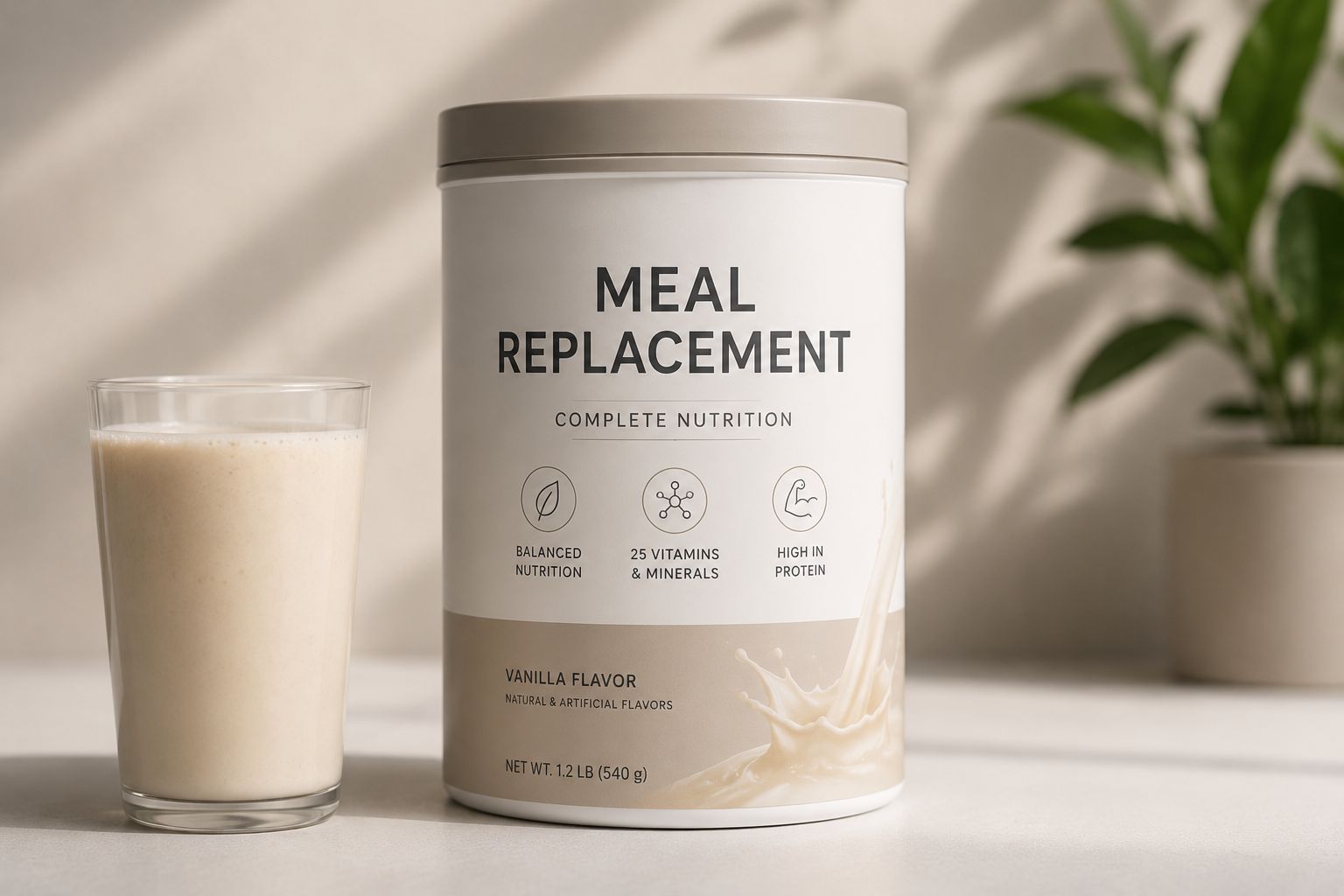
IM8 launched in December 2024 as a partnership between Prenetics founder Danny Yeung and David Beckham, who serves as co-founding equity partner. Its flagship product, Daily Ultimate Essentials, is a 90-ingredient powdered supplement positioned to replace 16 separate products with a single daily serving—an all-in-one framing designed to simplify a fragmented category rather than compete SKU-for-SKU with commodity vitamin brands. A second product, Daily Ultimate Longevity, rounds out the current range, with an IM8 Hydration line and a premium gummies range scheduled across the fourth quarter of 2026 and first quarter of 2027.
The brand leans heavily on celebrity and athlete equity partners—including Giannis Antetokounmpo, Aryna Sabalenka, Formula 1 driver Ollie Bearman, and Inter Miami CF—layered on top of an acquisition engine that runs continuous, automated ad and landing-page experimentation across all 43 markets. That combination of premium positioning, athlete-driven distribution, and a systematic performance-marketing machine is precisely the profile General Catalyst's model is built to finance.
The Wider Read: A Crowded, Copy-Prone Category
IM8's structure also throws the state of the broader wellness-supplement market into sharper relief. All-in-one powder blends and greens-style supplements have become one of the most heavily replicated formats in consumer health, with white-label and private-label manufacturers routinely turning around near-identical formulations for smaller brands within weeks of a category leader's success. In that environment, a nine-figure marketing war chest is not just a growth lever—it is a moat. Brand recognition, athlete endorsement, and paid-media dominance are difficult for a low-cost formulation copy to replicate, even when the product inside the tub is similar.
That dynamic is a familiar one for regional operators. Saudi Arabia's own dietary supplements market—valued at roughly $1.5 billion in 2025 and forecast to grow at close to an 8% CAGR through the next decade—is similarly fragmented, with vitamins and multivitamins commanding the largest share and sports and functional nutrition the fastest-growing segments. The broader GCC nutraceuticals market, estimated at $7.5 billion in 2024, faces the same pressure: differentiated formulation alone rarely holds a price premium for long without a comparable investment in brand and distribution behind it.
Relevance to Saudi Arabia and MENA
For Saudi and Gulf wellness and supplement brands, the IM8-General Catalyst deal is less a story about David Beckham and more a case study in financing architecture. Regional D2C nutrition brands scaling across the GCC's fragmented retail and e-commerce landscape face the same core tension IM8 faced: aggressive customer acquisition is what builds category leadership, but funding it through repeated equity rounds erodes founder ownership fast in a region where late-stage growth capital remains comparatively thin.
A structure that finances marketing spend against proven cohort economics—rather than against a growth narrative—offers a template regional investors and operators are likely to study closely as GCC consumer health and wellness brands mature past their early growth stage and look for capital that does not require repricing the entire company to keep scaling.
Editorial View
The headline number here is $1 billion, but the more consequential detail is the structure underneath it. IM8's deal is a live demonstration that once a consumer brand's acquisition economics are proven and repeatable, venture-style dilution becomes an unnecessary cost of capital rather than a requirement of growth. That has real implications for how the next generation of high-growth consumer health and wellness brands—in Saudi Arabia and globally—choose to finance the marketing spend that builds category leadership, and for how much equity founders are willing to give up to get there.