The Great Protein Reset:
How Global FMCG Giants Are Rebuilding Around Function
PepsiCo launched two protein products in 90 days and acquired Poppi for $1.95bn. Coca-Cola elevated fairlife to a global growth priority. Unilever paid $90m for a plant-protein brand. The center of gravity in packaged food is shifting — and the shift is accelerating.
"Once an industry decides that a macro-nutrient is a strategic platform rather than a product feature, the acquisition wave follows almost automatically. Protein has reached that inflection point."
— Saudi FoodTech · FMCG Strategy & Functional Nutrition, May 2026For most of the past decade, protein belonged to a defined corner of the consumer landscape: gym culture, sports nutrition, specialist supplements, niche challenger brands. It occupied its own shelf fixture in pharmacies and gyms, carried a premium that mainstream shoppers rarely paid, and spoke a language — amino acid profiles, leucine thresholds, bioavailability — that excluded most of the population.
That era is over. In the span of roughly ninety days spanning early 2026, the world's largest food and beverage companies simultaneously repositioned protein not as a category, but as a filter — a mandatory lens through which every product in their portfolio is now evaluated. The evidence is not anecdotal. It is visible in product launches, billion-dollar acquisitions, and explicit strategic prioritisations at the C-suite level of companies that collectively control trillions in consumer purchasing.
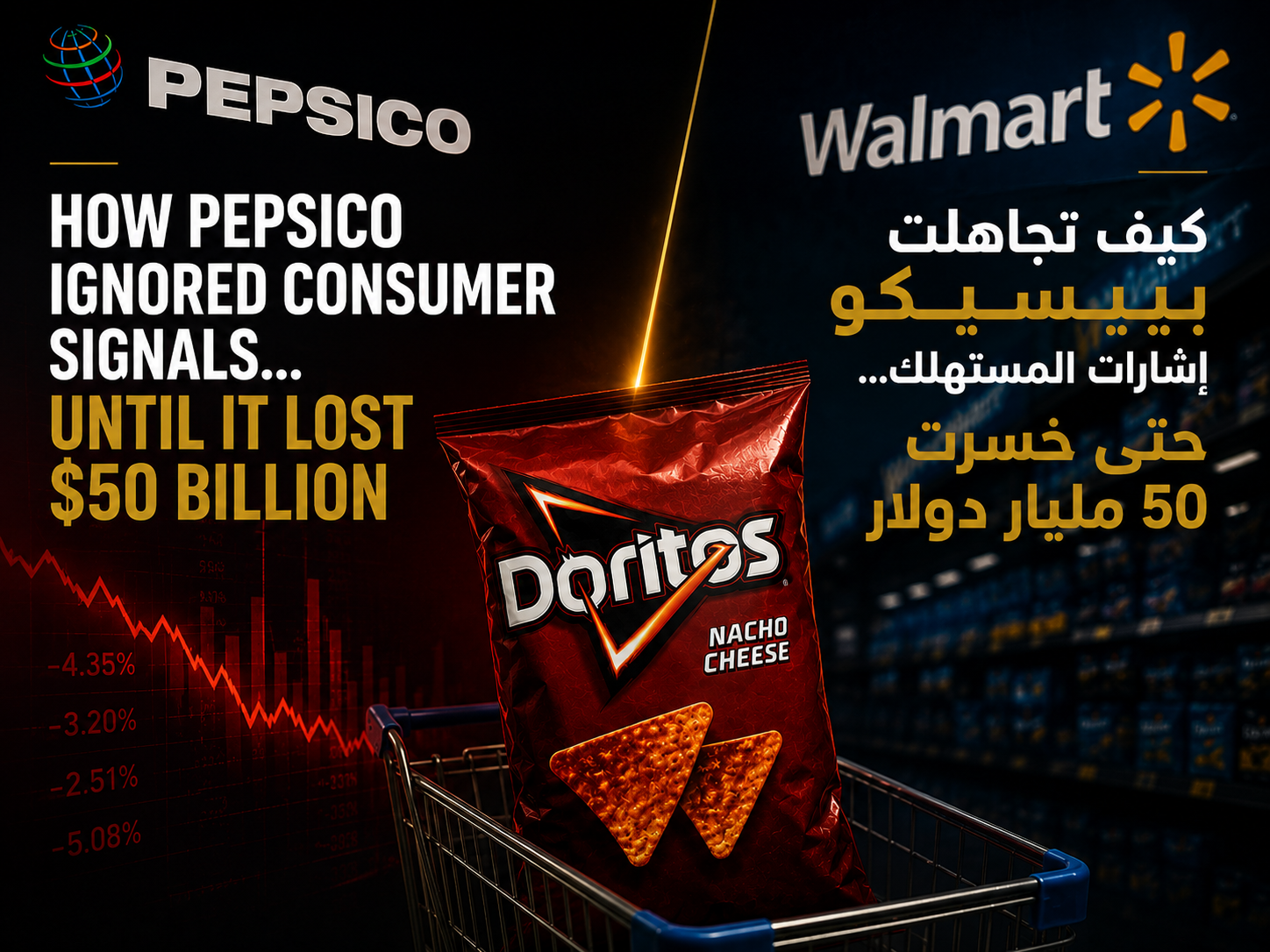
PepsiCo launched Doritos Protein in February 2026, delivering 10 grams of protein per serving with a 17-gram single-serve format in development. In May 2026, it followed with Propel Clear Protein — 20 grams of whey protein, 3 grams of fibre, and electrolytes, explicitly designed around the emerging GLP-1 consumer segment. Add its $1.95 billion acquisition of Poppi, a functional prebiotic soda brand, and PepsiCo has assembled in months what would have taken years to build organically: a functional platform spanning both snacks and beverages.
But PepsiCo is not acting alone. What is unfolding across the global FMCG landscape is the most concentrated convergence of strategic capital around a single nutritional category that the industry has seen in a generation.
The Acquisition Wave: Twelve Months That Redrew the Map
Between February 2025 and May 2026, the six largest moves in functional nutrition M&A told a coherent story. Each acquisition was distinct in geography, category, and deal structure. Together, they constitute a single strategic thesis: the consumer of 2026 and beyond will evaluate packaged food and beverage through a functional lens first, and traditional category logic second.
-
Feb 2025
Celsius acquires Alani Nutrition for $1.8bn (closed April 2025). The deal combined Celsius's established energy drink infrastructure with Alani's rapidly growing protein-forward, women's-health-oriented brand. The merged entity competes across the energy-to-protein continuum — a strategic position that did not exist in the category three years prior.
-
Apr 2025
The Hershey Company acquires LesserEvil (closed November 2025). Hershey, historically defined by confectionery indulgence, made a deliberate entry into better-for-you snacking. LesserEvil's clean-label, reduced-ingredient positioning gave Hershey credibility in a consumer segment it had no equity in previously.
-
Feb 2026
Marico acquires 60% of Cosmix for $25m. India's largest consumer goods company accelerated into plant protein with a stake in Cosmix, a direct-to-consumer wellness brand with strong urban millennial positioning. The move signals that protein's strategic importance is no longer confined to Western markets.
-
Feb 2026
Hindustan Unilever acquires OZiva for $90m. OZiva, India's leading plant-based protein and women's health brand, was absorbed by HUL at a valuation that reflected both its revenue trajectory and strategic scarcity: credible, scaled, consumer-trusted plant protein brands are in short supply globally.
-
Feb 2026
Coca-Cola elevates fairlife to a global growth priority. The company named fairlife — its ultra-filtered, high-protein milk brand — as one of only three global growth priorities, alongside Zero Sugar and Topo Chico. Fairlife's trajectory in the US market had already made it one of the fastest-growing dairy brands in retail. Its elevation to global priority status signals Coca-Cola's read on where sustained volume growth will come from.
-
May 2026
Mondelēz expands into functional snacking with 20g protein Perfect Snacks Bar and relaunches Clif Bar Builders. Mondelēz, owner of Oreo and Cadbury, is retrofitting its better-for-you portfolio around protein density — a strategic pivot that would have been unthinkable from a snack confectionery company five years ago.
Every company above had the option to develop protein capability organically. Most chose acquisition, or are running both strategies simultaneously. The reasoning is straightforward: in a market where consumer trust and brand authenticity take years to build, acquisition of an established functional brand compresses the timeline. The risk is integration; the alternative is irrelevance.
PepsiCo's 90-Day Sprint: Building a Functional Platform at Scale
PepsiCo's moves deserve particular scrutiny because they illustrate the full spectrum of functional transformation: new product development, brand extension, and large-scale acquisition deployed simultaneously across both snacks and beverages.
Doritos Protein. Launched in February 2026, Doritos Protein marks the first time one of the world's most iconic snack brands has been reformulated around a macronutrient benefit. The product delivers 10 grams of protein per serving — territory that previously belonged exclusively to dedicated protein bars and supplements. The 17-gram single-serve format in development takes the proposition into impulse and convenience retail, where protein has historically struggled to compete on convenience and taste familiarity. Doritos provides both.
Propel Clear Protein. Launched in May 2026, Propel Clear Protein carries 20 grams of whey protein, 3 grams of fibre, and electrolytes in a clear, liquid format. The product's explicit GLP-1 positioning is significant: PepsiCo is publicly acknowledging that a meaningful and growing consumer segment is using GLP-1 medications and adapting their nutrition behaviour accordingly — smaller portions, higher protein density, greater attention to satiety and muscle preservation. Propel Clear Protein is designed for that consumer.
The Poppi acquisition. At $1.95 billion, PepsiCo's acquisition of Poppi represented the largest bet on the functional beverage category by any traditional FMCG company to date. Poppi's prebiotic soda proposition — built on apple cider vinegar, real fruit juice, and gut-health positioning — had already reached mainstream distribution across US retail. The acquisition gives PepsiCo a functional beverage anchor that complements its protein and electrolyte plays with the gut-health dimension that has become the third pillar of functional consumer demand.
What PepsiCo has assembled is not a collection of individual functional products. It is a platform logic: protein across snacks, functional hydration across beverages, and gut health as a connective tissue across both. The consumer who buys Doritos Protein at lunch, drinks Propel Clear Protein after a workout, and chooses Poppi at a social occasion is interacting with a unified functional proposition across multiple occasions in a single day.
This is the architecture of a functional FMCG platform — not a product launch strategy. The distinction matters enormously for competitive dynamics: individual functional products can be copied relatively quickly. Platform ecosystems, distribution density, and consumer habit formation across multiple occasions are significantly harder to replicate.
Any competitor that lacks a protein strategy across snacks and beverages, a gut-health entry, and a GLP-1 consumer proposition is not currently competing for the same consumer. The gap will widen as PepsiCo's distribution advantages compound.
The GLP-1 Variable: From Conference Slide to Live Innovation Brief
Two years ago, GLP-1 medications — the class of drugs including semaglutide and tirzepatide, marketed as Ozempic, Wegovy, and Mounjaro — were discussed in FMCG boardrooms primarily as a risk to volume. The concern was straightforward: if a significant portion of the population reduces caloric intake substantially, what happens to the snack and beverage categories built on high-frequency, high-volume consumption?
That framing has evolved significantly. The industry's leading strategists now view GLP-1 not as a volume threat but as a consumer segmentation signal — and a product innovation brief.
GLP-1 users exhibit a specific nutritional profile: reduced appetite and overall caloric intake, but a strong need to maximise protein and micronutrient density within smaller eating occasions. Muscle preservation becomes a priority alongside weight loss. Satiety-enhancing ingredients — protein, fibre, certain fats — become more valuable per calorie consumed. The functional beverage with 20 grams of protein and 3 grams of fibre in a low-calorie, liquid format is not an arbitrary formulation choice. It is a direct response to what GLP-1 consumer behaviour demands.
Estimates place the number of current GLP-1 medication users in the United States alone at between 12 and 15 million, with projections suggesting this figure could reach 30 million by 2030. The addressable market for GLP-1-optimised food and beverage products is not a niche. It is a fast-growing consumer segment with specific, identifiable nutritional needs — and currently very limited product solutions tailored to those needs.
PepsiCo's Propel Clear Protein is the first major FMCG launch to explicitly name GLP-1 consumers in its positioning. That directness is itself a signal: the company has made a commercial calculation that the GLP-1 consumer is large enough, stable enough, and nutritionally distinct enough to warrant a dedicated product — not a reformulation, but a new product built from the GLP-1 brief upward.
For companies that have not yet incorporated GLP-1 consumer insights into their 2027 pipeline development, the competitive disadvantage is already accumulating. The window for being a fast-follower in this specific segment is narrowing as PepsiCo, and likely others behind it, establish consumer associations between their brands and GLP-1-compatible nutrition.
The Four Strategic Patterns Reshaping Global FMCG
Across the acquisitions, product launches, and strategic repositioning events of the past twelve months, four structural patterns emerge that are not company-specific but industry-wide. Understanding these patterns is the prerequisite for assessing competitive position in the next phase of FMCG strategy.
Protein has ceased to be a product category and become a mandatory evaluation criterion for every SKU in a major FMCG portfolio. The question is no longer "should we launch a protein product?" but "does this product have a functional benefit story, and is protein part of it?" Every major launch in H1 2026 reflects this filter in some form.
The winning strategy is not building new functional brands from scratch. It is applying functional benefit credentials to established brands with existing consumer trust, distribution scale, and category leadership. Doritos Protein, Propel Clear Protein, fairlife, Clif Bar Builders — none of these required building brand awareness. They required reformulation and re-positioning of assets already in consumers' consideration sets.
The GLP-1 consumer is no longer a projected future segment. They are a live, growing, nutritionally specific consumer group with purchasing power and identifiable product needs. Companies that have integrated GLP-1 consumer profiles into their 2026–2027 innovation pipeline are operating at a structural advantage over those that have not yet translated the macro trend into specific product briefs.
The leaders are not choosing between organic development and M&A. They are executing both tracks in parallel. PepsiCo launched two new products and completed a $1.95bn acquisition within the same 90-day window. Celsius acquired Alani Nutrition while continuing to develop its own protein-adjacent product lines. The strategic question has shifted from "build or buy?" to "how quickly can we do both?"
These four patterns are mutually reinforcing. A company that treats protein as a portfolio filter will naturally identify its strongest brand equities for retrofitting. That retrofitting effort generates consumer data that refines the GLP-1 innovation brief. And the gap between what organic development can deliver and what acquisition can access drives the simultaneous build-and-buy approach. The system is coherent — and it accelerates as more capital flows into the category.
What This Means for MENA and the Saudi Market
The strategic dynamics unfolding in North America, Europe, and South Asia carry direct implications for the GCC and broader Middle East — a region where the functional nutrition opportunity is, in many respects, structurally more favourable than the markets where the current wave of investment is concentrated.
Saudi Arabia and the wider GCC are operating from a compelling convergence of structural factors: a young demographic skewing heavily toward health and fitness consciousness; government-led nutrition and physical activity mandates under Vision 2030; rising disposable incomes in urban centres; a modern trade infrastructure that continues to expand; and a food culture increasingly receptive to functional innovation across both international and regional brands.
The GCC protein supplement and functional food market was valued at approximately $1.2 billion in 2024 and is forecast to grow at a compound annual rate exceeding 8% through 2030, according to regional market data. Saudi Arabia accounts for the largest share of that market, driven by a fitness culture that has expanded rapidly since 2016 and a Vision 2030 framework that explicitly prioritises physical health outcomes among the population.
The protein beverage segment in the Kingdom remains dominated by imported brands — primarily from the US and Europe — at price points that leave significant room for competitively priced regional alternatives. The plant-protein segment, which commands a premium in Western markets and is growing rapidly in India following the Marico and Unilever moves, is at an early stage of consumer awareness in the GCC — presenting an opportunity for first-mover positioning in an underserved segment.
The GLP-1 dynamic, while currently less prominent in the Saudi market than in the US, is not absent. GLP-1 medication usage is growing among urban, health-aware consumers across the GCC. As regional physicians and pharmacists increase familiarity with these treatments, and as awareness of GLP-1-compatible nutrition becomes mainstream, the product gap that PepsiCo is currently addressing in the US will materialise in the MENA region — likely within a 24–36 month window.
The broader strategic point is that the playbook being executed by PepsiCo, Coca-Cola, Unilever, and Mondelēz in their core markets is fully portable to the Saudi and GCC context. The consumer insight — that health-aware individuals want functional benefits in every consumption occasion, not just dedicated health moments — is not culturally specific. It is a global consumer behaviour shift that the region's demographics and policy environment make especially pronounced.
- 1 The protein premium tier is significantly underserved. Most available high-protein products in Saudi modern trade are imported at price points that exclude a substantial portion of the health-interested consumer base. A credible, locally produced or regionally branded protein product at accessible price positioning would enter a largely uncontested space.
- 2 Vision 2030 alignment is a commercial accelerant. Products that credibly support the Kingdom's public health and physical activity objectives — and that can demonstrate that alignment — have access to government partnerships, retail placement support, and public communications channels that brands without that alignment cannot leverage.
- 3 Global brands will arrive with distribution scale. The acquisitions being made in 2025–2026 will translate into GCC distribution pushes within 18–36 months, as global FMCG companies integrate their new functional brands into existing regional supply chains. Regional players and retailers who move now have a window that will not remain open indefinitely.
- 4 Retail is the critical chokepoint. Modern trade placement — hypermarkets, supermarkets, convenience formats — remains the dominant FMCG purchasing channel in the GCC. Any functional brand that secures shelf space and consumer trial in the current window will have a durable distribution advantage once global players arrive with marketing budgets and brand recognition.
Conclusion: From Indulgence-First to Function-First
The center of gravity in global FMCG is shifting. The companies making this shift explicit through capital allocation — through acquisitions, reformulations, and strategic prioritisations measured in billions of dollars — are not reacting to a trend. They are attempting to define the next default in packaged food and beverage.
The parallel to previous category transitions is instructive. When the industry shifted from full-sugar to diet variants, the early movers built consumer associations and distribution positions that latecomers paid dearly to acquire. When the premium tier expanded, the brands already in it captured disproportionate value growth. The functional nutrition transition is following the same structural logic — earlier movers will capture the brand relationships, consumer data, and retail positioning that define competitive advantage in the next phase.
Protein is the clearest current signal, but it is not the only one. Gut health, GLP-1-compatible formulations, adaptogens, and micronutrient density are converging into a broader functional expectation that consumers are beginning to apply to every category, every occasion, and every purchase decision. The companies that have understood this as a portfolio-wide strategic shift — not a product trend — are the ones executing at the pace and scale visible in the M&A and launch activity of the past twelve months.