

The Food-as-Medicine Imperative:
Six Forces Rewriting the Global Food System
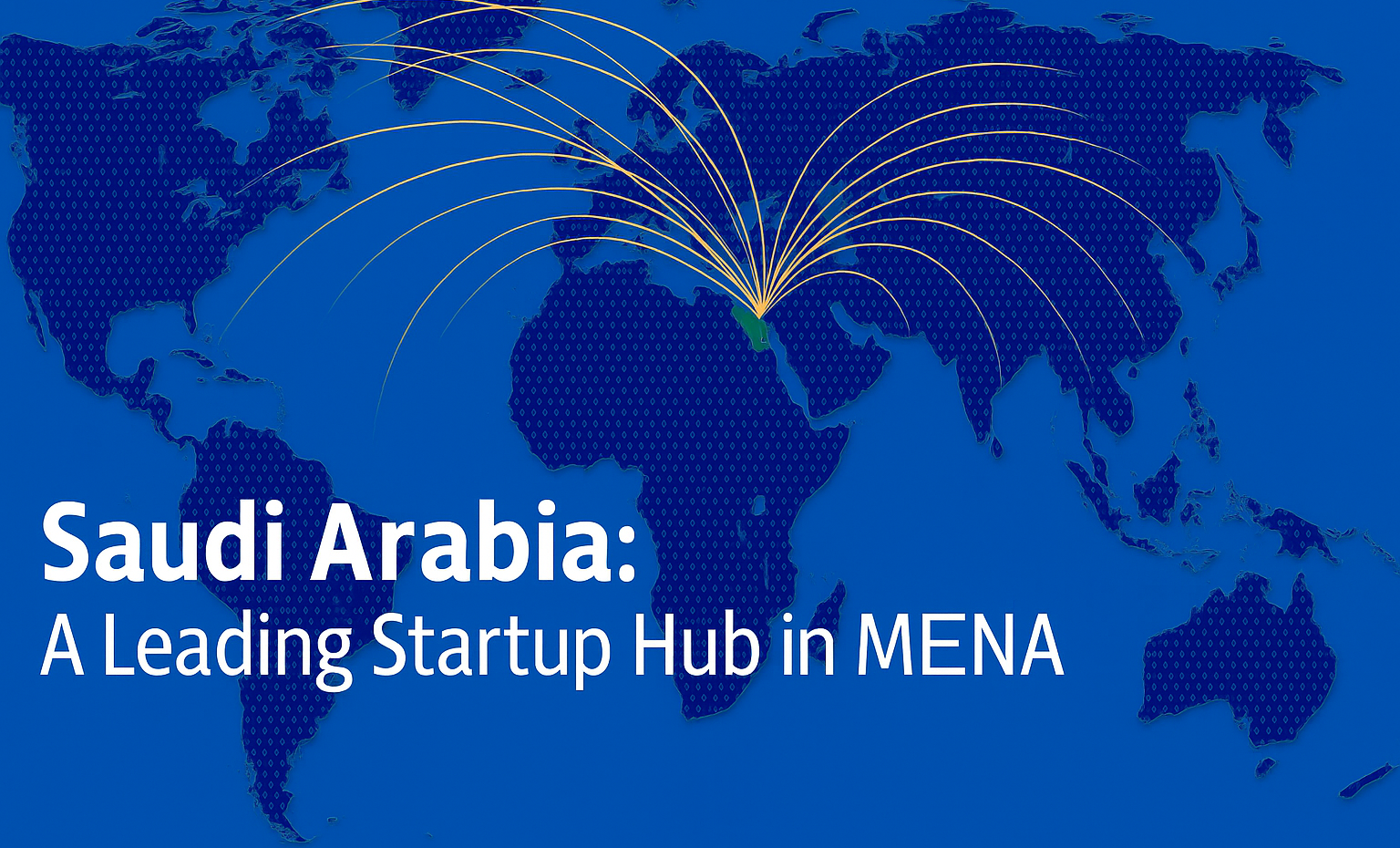
A structural shift is underway that goes far beyond wellness marketing. Precision fermentation, AI-driven formulation, GLP-1 drug proliferation, microbiome science, personalized nutrition, and ingredient circularity are converging to redefine what food is, who makes it, and who profits. Saudi Arabia sits at the intersection of risk and opportunity.
A Structural Realignment, Not a Wellness Trend
For decades, the relationship between food and health was managed at the margins — fortification programs, low-fat reformulations, occasional vitamin enrichment. The core logic of the food industry remained transactional: calories in, preference satisfied, margin extracted. That logic is now being dismantled by forces operating simultaneously from the demand side, the technology side, the regulatory environment, and the pharmaceutical sector. What is emerging in its place is a food system increasingly organized around a single organizing principle: food as a primary health intervention.
The commercial implications of this shift are consequential and underappreciated. The global Food-as-Medicine market reached $26.5 billion in 2025 and is projected to reach $66.4 billion by 2033, growing at a 12.2% CAGR — a pace that far outstrips the broader packaged food sector. The functional food and nutraceuticals market, a broader category that encompasses fortified staples, bioactive ingredients, and therapeutic food products, is valued at approximately $300 billion today and is tracking toward $500 billion by 2033. These are not speculative projections anchored in hype; they reflect a measurable and accelerating reorientation of consumer spending, clinical practice, and industry investment.
The drivers are structural. Rising rates of diet-related non-communicable disease — diabetes, obesity, cardiovascular conditions — are straining public health systems globally, pushing governments to intervene in food composition through regulation and incentive. At the same time, a generation of consumers that has grown up with wearable health monitoring, nutrition apps, and personalized wellness recommendations is demanding that food products deliver measurable, specific health outcomes. And a new class of pharmaceutical interventions — the GLP-1 receptor agonists — is reshaping the demand curve for food categories in ways that the industry is only beginning to understand. For food manufacturers, investors, and policymakers in Saudi Arabia and across the GCC, the question is no longer whether to engage with this shift. It is how quickly, and along which vectors.
Key Takeaways
- The Food-as-Medicine market is growing at 12.2% CAGR, reaching $66.4B by 2033 — the single fastest-growing strategic segment in the global food industry.
- GLP-1 drug users will account for 35% of food and beverage sales by 2030; they are already cutting caloric intake by ~30% and monthly grocery spend by up to 31%, forcing urgent reformulation across CPG portfolios.
- Precision fermentation is projected to reach $57B by 2032 at a 41% CAGR — with the NEOM Investment Fund's partnership with Liberation Labs marking Saudi Arabia's first direct stake in this technology.
- AI is now embedded across food R&D: 71% of CPG executives use AI (up from 42% in 2024), and Nestlé generated over 1,300 product concepts in three weeks using generative tools.
- Gut health is Innova Market Insights' #1 food and beverage trend for 2026; the microbiome nutrition market is growing at 16.4% CAGR, driven by postbiotics, synbiotics, and AI-guided personalization.
- The GCC functional food market is valued at $18.2B in 2025, growing at 10.9% CAGR to $56.8B by 2036 — Saudi Arabia leads volume, with Vision 2030 accelerating domestic production investment.
- Commodity price volatility in cocoa and coffee is accelerating investment in fermentation-derived flavor alternatives, with major confectionery companies deploying AI formulation tools as a supply chain resilience measure.
The GLP-1 Disruption: More Structural Than the Market Feared
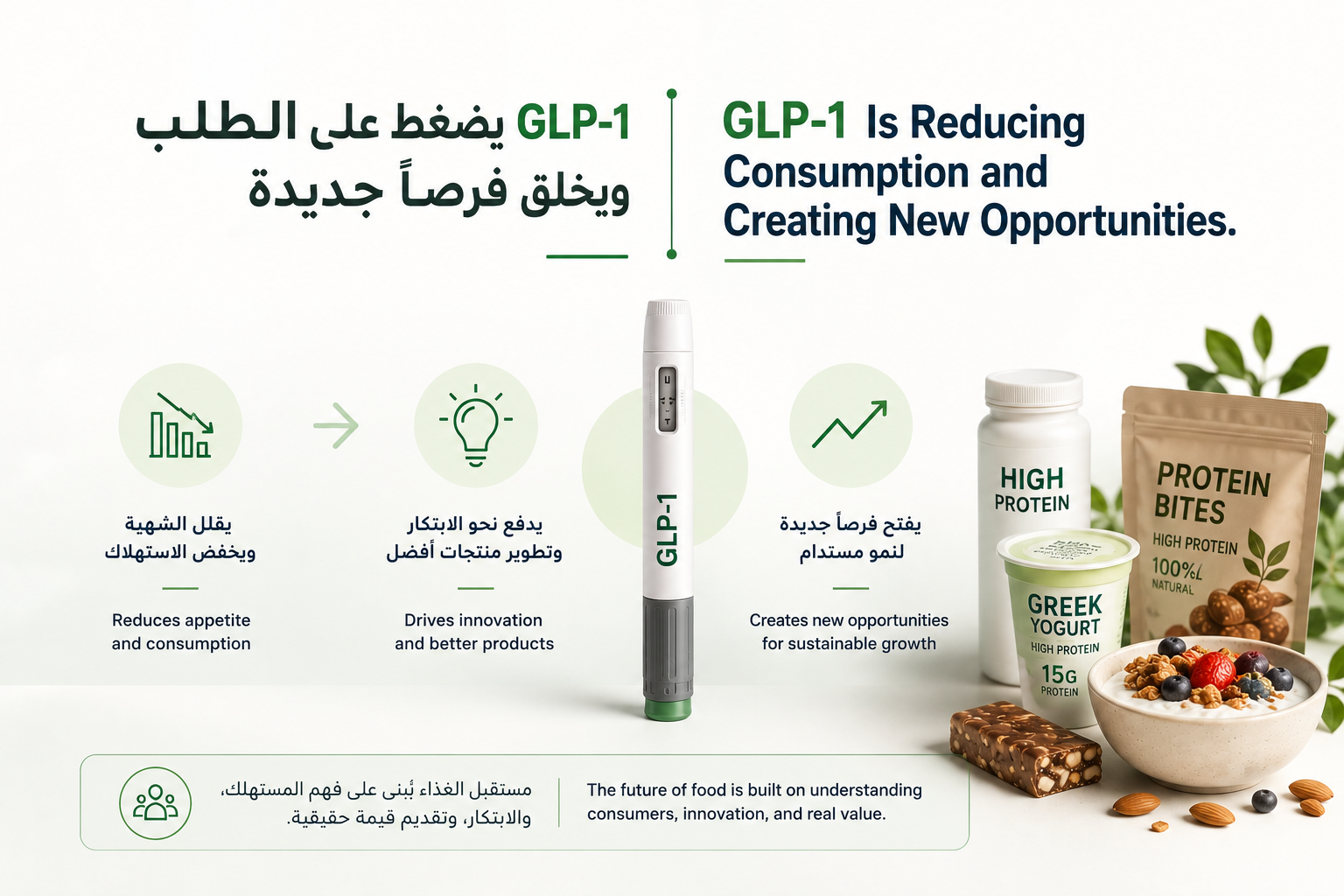
When GLP-1 receptor agonist medications — including semaglutide-based drugs like Ozempic and Wegovy, and tirzepatide (Mounjaro) — received obesity treatment approval in the United States in 2021, the food industry's initial reaction was anxiety. If tens of millions of consumers were suppressing appetite and reducing caloric intake by 30%, the consequences for packaged food volumes seemed catastrophic. That anxiety has since been replaced by something more nuanced and, commercially, more tractable: a recognition that the GLP-1 era is not destroying food demand — it is restructuring it.
The scale is no longer speculative. As of 2026, an estimated 10 million Americans are on GLP-1 treatment, a figure J.P. Morgan projects will exceed 30 million by 2030. Novo Nordisk's oral Wegovy launched in January 2026; Eli Lilly is preparing its own oral GLP-1 drug. A 2024 KPMG study found that GLP-1 users reduced caloric intake by 21% and monthly grocery spending by 31% — numbers described by industry analysts as "staggering." By 2030, GLP-1 users are projected to account for 35% of food and beverage sales in the United States.
The reformulation imperative is now explicit. Nestlé has launched its first new brand in nearly 30 years, designed specifically for consumers on GLP-1 diets and emphasizing high protein density and micronutrient concentration. General Mills and Danone are repositioning high-protein and high-fiber products toward this audience. The 2025–2030 US Dietary Guidelines now explicitly recommend prioritizing protein at every meal, while calling for reduced refined carbohydrates and ultra-processed foods — a policy signal that aligns public health infrastructure with the clinical reality of GLP-1 adoption. The strategic imperative for food manufacturers is clear: viewing your product portfolio through the lens of a world where consumers eat less but demand more is no longer optional.
"-Reformulation isn't optional — it's going to be required. You need to look at your portfolio through the lens of a world where people eat less."
For Saudi Arabia and the GCC, the GLP-1 trend carries direct relevance even where pharmaceutical penetration remains lower than in the United States. The underlying consumer shift — toward protein-dense, nutrient-concentrated, lower-volume eating — is a global behavioral trajectory that is not dependent on drug uptake. GCC food manufacturers that begin now to reformulate toward higher protein content, reduced glycemic load, and functional ingredient profiles will be positioned ahead of a demand shift that is already underway in their most sophisticated consumer segments.
Precision Fermentation: The Most Important Technology in Food Right Now
If there is a single technology category that commands the most serious capital, the deepest corporate attention, and the most credible long-term commercial thesis in global food technology today, it is precision fermentation. The numbers reflect this conviction with unusual clarity. The global precision fermentation market was valued at approximately $4.3 billion in 2025 and is projected to reach $57 billion by 2032, growing at a 41% compound annual growth rate. Within the ingredients segment specifically, proteins produced through precision fermentation already command a 36.3% share of the product mix in 2026, with recombinant dairy proteins leading adoption.
The commercial logic is straightforward. Precision fermentation uses genetically engineered microorganisms — yeast, bacteria, fungi — to produce specific proteins, enzymes, fats, and bioactive compounds at scale, without animal agriculture and without the land, water, and emissions footprint it entails. Unlike plant-based protein, which involves compromise on texture and flavor, precision fermentation can produce molecules that are structurally and functionally identical to animal-derived equivalents. Unlike cultivated meat, which remains in regulatory holding patterns across most markets, fermentation-derived ingredients have established approval pathways — the FDA's GRAS process, the EU's novel food framework — that have already enabled commercialization at scale.
The investor community has drawn the same conclusion. In March 2026, Standing Ovation — a French precision fermentation company — secured a $34.2 million Series B to expand industrial-scale dairy protein production. In November 2025, The Every Company raised $55 million in Series D funding to extend manufacturing capacity for precision-fermented egg proteins. In Australia, All G formed a joint venture with Savencia's ingredient arm to accelerate precision-fermented dairy protein commercialization. These are not early-stage research bets; they are scale-up investments from companies with commercial products in active markets.
Saudi Arabia's strategic position in this landscape is more advanced than most regional stakeholders recognize. In April 2025, the NEOM Investment Fund (NIF) announced a strategic investment in Liberation Labs — a US-based precision fermentation biomanufacturing specialist — to develop a commercial-scale facility inside the Kingdom. The facility will operate under Topian, NEOM's dedicated food company, with the explicit goal of producing high-value proteins domestically, reducing import dependency, and positioning Saudi Arabia as a regional biomanufacturing hub. Liberation Labs had previously secured $50.5 million in a fundraising round in February 2025, with NIF participating alongside a range of institutional investors. The Kingdom's first direct stake in precision fermentation infrastructure is not a pilot; it is a strategic commitment to a technology that the global food industry regards as foundational.
Saudi Arabia is taking bold steps to lead in the emerging precision fermentation industry — and NEOM's investment in Liberation Labs is the clearest signal yet that the Kingdom intends to be a producer, not merely a consumer, of next-generation food ingredients.
Saudi FoodTech Analysis — June 2026AI in Food R&D: The Competitive Gap Is Opening Now
Artificial intelligence has moved from a food industry talking point to embedded infrastructure with measurable, verified commercial consequences. The evidence accumulated in 2025 and early 2026 makes the competitive dynamic clear: companies that have integrated AI into their formulation and product development workflows are operating at a different speed, and the gap is compounding.
The aggregate numbers frame the opportunity. AI in food processing is projected to grow from approximately $15 billion in 2025 to $140 billion by 2034, a 28% CAGR. The adoption surge is real: 71% of CPG executives reported using AI in 2025, up from 42% in 2024 — a single-year increase that signals the transition from experimentation to standard practice. Nestlé generated over 1,300 product concepts in three weeks using generative AI tools — a volume that previously would have required months of traditional sensory science work. Unilever has embedded AI so deeply into its food R&D that its Knorr Fast & Flavourful Paste was developed in roughly half the usual development time, with AI modeling formulation behavior that previously required extensive physical lab work.
The specific use cases that are delivering commercial value are worth cataloguing. Ingredion has deployed AI-aided predictive modeling for sugar reduction solutions, enabling formulation changes that maintain sensory quality while reducing caloric content — a capability directly relevant to the GLP-1 and health-conscious consumer transitions. Shiru's Flourish platform maps more than 77 million natural protein sequences, predicting solubility, expression characteristics, and allergen risk for novel protein ingredients — compressing what was previously a decade-long discovery process into months. Ingredion and Shiru's partnership, announced in March 2026, targets prebiotic ingredients specifically, with gut health identified by Innova Market Insights as the number one food and beverage trend for 2026. Mondelez has deployed AI with Fourkind for snack formulation, integrating cost, nutrition, taste, and sustainability targets into a single optimization framework.
For food manufacturers across the MENA region, the risk calculus is shifting. The question is no longer whether AI-driven formulation creates competitive advantage — the evidence on that is no longer ambiguous. The question is whether mid-sized regional manufacturers can access the tools, data partnerships, and technical talent required to close the gap before it becomes structural.
Gut Health and the Microbiome: The Decade's Defining Ingredient Frontier
Gut health has emerged as the dominant consumer-facing narrative in functional food innovation, and the science underpinning it has matured sufficiently to support credible product development at commercial scale. Innova Market Insights named "Gut Health Hub" the number one food and beverage trend for 2026, with 59% of global consumers actively seeking functional ingredients to support digestive and immune health. The microbiome nutrition market was valued at $2.97 billion in 2025 and is growing at a 16.4% CAGR through 2033, with the synbiotic segment — products combining prebiotics and probiotics — projected to grow even faster at 24.1%.
The innovation pipeline has expanded well beyond traditional probiotic yoghurts and supplement capsules. The postbiotic category — bioactive compounds produced or released by microbial activity — is gaining significant commercial traction. In May 2025, Nutraland released AKK001, a postbiotic form of Akkermansia muciniphila specifically formulated to support gut barrier health and metabolic fitness. Danone's expanded microbiome research center — integrating microbiology, clinical science, and AI — is investigating how food can be precisely tailored to support gut function across life stages. Novonesis, the biotech company formed from the merger of Novozymes and Chr. Hansen, is expanding its human health division around microbiome-derived solutions for metabolic and immune applications.
The intersection of gut health with AI is creating a new category of diagnostic-linked nutrition products. Platforms including ZOE, Viome, and DayTwo are enabling consumer-facing microbiome profiling, with personalized dietary recommendations generated from gut sequencing data. Cowellnex and Metagen are developing AI-driven algorithms that propose personalized food products based on individual microbiome test results. Ingredion and Holobiome announced a partnership in early 2026 to map microbiome responses to specific functional ingredients — building the evidence base required for product-level health claims. These are not emerging concepts; they are commercial products generating real revenue in sophisticated consumer markets.
Nearly 70% of global consumers now identify fiber as a top nutrient they seek to increase, driving what has been termed the "fibermaxxing" trend. This behavioral shift, combined with growing awareness of the gut-brain axis — the bidirectional relationship between microbiome composition and cognitive and mental health outcomes — is creating formulation opportunities that extend far beyond digestive wellness into mood, sleep, and cognitive performance categories.
Personalized Nutrition: The $36 Billion Opportunity Entering Commercial Reality
Personalized nutrition has been a theoretical aspiration of the food and health industries for two decades. In 2026, the combination of affordable genomic sequencing, AI-driven data analysis, wearable health monitoring, and microbiome diagnostics is finally delivering it at commercially viable scale. The personalized nutrition market stands at $18.62 billion in 2026 and is projected to reach $35.96 billion by 2031 — a trajectory that reflects genuine commercial momentum rather than aspirational forecasting.
The convergence of technologies enabling personalization is significant. Machine learning models can now integrate genomic data, microbiome profiles, continuous glucose monitor readings, and dietary logs to generate dietary recommendations that are specific to an individual's metabolic phenotype rather than population-level averages. This is not a consumer application curiosity; it is reshaping how the most sophisticated food companies and retailers think about product development. Rather than formulating for a demographic average, the capability now exists to formulate for a population distribution — and to match product recommendations to individual health profiles at the point of purchase.
For MENA food manufacturers and retailers, the personalized nutrition opportunity maps cleanly onto regional health epidemiology. The GCC's documented prevalence of Type 2 diabetes — among the highest rates globally — creates a specific and addressable consumer segment for glycemic-management nutrition products. Low-glycemic functional foods, postbiotic formulations supporting metabolic health, and high-protein products aligned with GLP-1 complementary nutrition all have direct commercial relevance in Saudi Arabia's evolving health-conscious consumer market.
Ingredient Circularity: From ESG Narrative to Margin Strategy
Circular ingredient innovation has undergone a significant commercial repositioning in the past two years. What was primarily framed as an environmental or sustainability story — reducing waste, cutting disposal costs, meeting ESG commitments — is increasingly structured as a margin and product differentiation strategy. The shift matters because it changes the business case from compliance-driven to value-creation-driven, which expands the addressable implementation base considerably.
The examples are diverse and commercially validated. Spent grain from brewing operations is being processed into high-fiber flour alternatives that command premium positioning in the bakery and sports nutrition categories. Fruit and vegetable processing byproducts are being concentrated into natural colorants, flavor enhancers, and antioxidant extracts. Olive mill waste — significant in both Mediterranean production contexts and in Saudi and Gulf commercial contexts given the region's growing olive cultivation — is being processed into high-value polyphenol extracts with demonstrated functional health benefits. In each case, the manufacturer simultaneously eliminates a waste disposal cost and generates a new revenue-bearing product line.
Regulatory frameworks are accelerating adoption. The European Union's circular economy action plan creates structural incentives for upcycled ingredient claims. Emerging labeling frameworks in the United States for "upcycled" ingredients — now governed by the Upcycled Food Association's certification standard — are enabling brands to communicate circularity as a premium product attribute rather than merely a supply chain efficiency measure. For Saudi food manufacturers operating in export markets or supplying multinational retailers, familiarity with these frameworks is increasingly a commercial prerequisite.
Commodity Risk and the Fermentation-Derived Replacement Race
The volatility in global commodity markets in 2024 and 2025 has accelerated a technology transition that was already underway. Cocoa prices reached multi-decade highs driven by West African crop failures linked to El Niño-related weather disruption and accelerating climate pressures. Coffee has experienced similar structural supply-side challenges. Both commodities face a longer-term agricultural geography problem: the climate zones in which they have historically been grown are contracting as temperatures rise.
The corporate response has been rapid and technology-intensive. Barry Callebaut has partnered with NotCo's AI platform and Planet A Foods to develop fermentation-derived and AI-formulated alternatives to conventional cocoa ingredients, explicitly framing the initiative as a supply chain resilience measure. Planet A Foods' hazelnut-based "ChoViva" cocoa alternative — produced without cocoa but matching the functional and sensory properties of conventional chocolate — has secured listings with European food manufacturers and is attracting significant investor attention. The competitive logic is compelling for large confectionery companies: a precision fermentation-derived cacao fat alternative eliminates the supply chain exposure to West African cocoa production entirely.
For Saudi Arabia and the GCC — which hosts a multi-billion-dollar confectionery and chocolate market almost entirely dependent on imported cocoa — the development of viable ingredient alternatives has direct commercial and strategic relevance. The Kingdom's food manufacturers that begin now to develop technical relationships with fermentation-derived ingredient suppliers will be positioned to manage commodity exposure that their competitors, dependent on conventional supply chains, will not.
"-The development of our first site in the Middle East, in partnership with NIF and Topian, is an opportunity to combine our biomanufacturing capabilities with their focus on food innovation — contributing to Saudi Arabia's food security and reducing import dependency."
Saudi Arabia and the GCC: Risk, Opportunity, and the Strategic Window
The GCC functional food and beverage market was valued at $18.2 billion in 2025 and is forecast to reach $56.8 billion by 2036, growing at a 10.9% CAGR — a pace that reflects genuine structural demand rather than speculative projection. Saudi Arabia is the market's volume anchor, growing at 10.7% annually as Vision 2030's investment in domestic food manufacturing capacity accelerates. Kuwait leads GCC growth rates at 11.8%; Qatar follows at 11.5%; the UAE at 11.2%. The convergence of national health mandates, growing chronic disease prevalence, rising disposable incomes, and rapidly modernizing retail infrastructure is creating a high-velocity commercial environment for functional and health-positioned food products.
The structural demand case is built on epidemiological reality. The GCC's rates of Type 2 diabetes, obesity, and cardiovascular disease are among the highest globally, with decades of dietary transition from traditional patterns toward ultra-processed food creating a chronic disease burden that public health systems are now explicitly incentivized to address through food policy. Saudi Arabia's National Transformation Program includes explicit nutrition initiatives. The SFDA has moved toward stricter food safety and nutritional labeling standards, creating a regulatory environment that rewards manufacturers with genuinely differentiated health credentials.
On the supply and investment side, Vision 2030 is deploying capital at meaningful scale. Saudi Arabia aims to localize 85% of food processing in 11 domestic clusters by 2030. The Public Investment Fund has signed a joint venture with AeroFarms to build and operate indoor vertical farms across the Middle East and North Africa. NEOM's food company Topian is building a precision fermentation facility in partnership with Liberation Labs. NEOM's own sustainable food production targets aim for 600,000 metric tonnes annually by 2030. These are not ambitions; they are funded programs with active project timelines.
The risk side of the ledger is equally clear. Saudi Arabia's food manufacturing base remains heavily concentrated in commodity processing and import distribution. Functional ingredient innovation, AI-driven formulation capability, and precision biotechnology are largely absent from the domestic industrial base. The companies and countries that are building these capabilities now — in Europe, North America, Singapore, and Israel — will be the dominant suppliers to GCC food manufacturers for the next decade unless the Kingdom moves deliberately to build competitive domestic capability.
What Manufacturers, Investors, and Policymakers Should Do Next
The analysis yields actionable imperatives across three stakeholder groups. For food manufacturers operating in or supplying to the Saudi and GCC market: the reformulation imperative driven by GLP-1 adoption and health-conscious consumer demand is not a future planning horizon — it is a present commercial requirement. Product portfolios need to be assessed against a framework of protein density, fiber content, glycemic profile, and functional ingredient credentials. Manufacturers without AI-assisted formulation capabilities face a compounding speed disadvantage that will become structural within three to five years.
For investors: the convergence of precision fermentation, microbiome nutrition, personalized dietary platforms, and AI-driven food R&D represents the most significant value creation opportunity in the food sector since the rise of plant-based protein — and it is earlier in its commercial development cycle. Deal flow is active; valuations remain reasonable relative to the addressable market sizes; and the regulatory environment in the Kingdom and Gulf is supportive of novel food investment in ways it was not five years ago. The NEOM Investment Fund's Liberation Labs stake should be read as a signal, not an anomaly.
For policymakers: the gap between Saudi Arabia's functional food demand growth (10.7% CAGR) and its domestic production capability is widening, not narrowing. Closing it requires deliberate policy instruments — regulatory fast-track pathways for novel food ingredient approvals aligned with SFDA's Vision 2030 mandate, R&D co-investment programs linking domestic food companies with fermentation and biotech platforms, and skills pipeline development in food science and biotechnology at Saudi universities. The window in which the Kingdom can build positioned domestic capability — rather than becoming a consumption market for capabilities developed elsewhere — remains open. It will not remain open indefinitely.
Editorial Assessment
The food system is undergoing a structural transformation that is more fundamental than any single technology, any single ingredient category, or any single policy initiative. The convergence of pharmaceutical appetite management, biotechnology-derived ingredient production, AI-enabled formulation, microbiome-targeted nutrition, and commodity supply chain disruption is rewriting the rules of competition in the global food industry. The companies that are winning are not simply those with the largest production capacity or the most established consumer brands. They are the companies that have understood, earlier than their competitors, that food is a health intervention — and built their product architecture, R&D capabilities, and supply chain relationships accordingly.
For Saudi Arabia, the stakes are higher than for most markets. The Kingdom imports the majority of its food, faces some of the world's most acute diet-related health challenges, and is simultaneously deploying an unprecedented volume of capital to reshape its economic structure. The six forces analyzed in this report — therapeutic nutrition demand, GLP-1 dietary restructuring, precision fermentation, AI-embedded R&D, microbiome science, and ingredient circularity — are not parallel trends to be monitored separately. They are mutually reinforcing forces that, together, define the competitive frontier of the global food industry for the next decade. Saudi Arabia's opportunity is to be a builder of that frontier, not a buyer of its outputs.