

Beyond Whey: The Collagen Shift
Rewriting Protein Nutrition
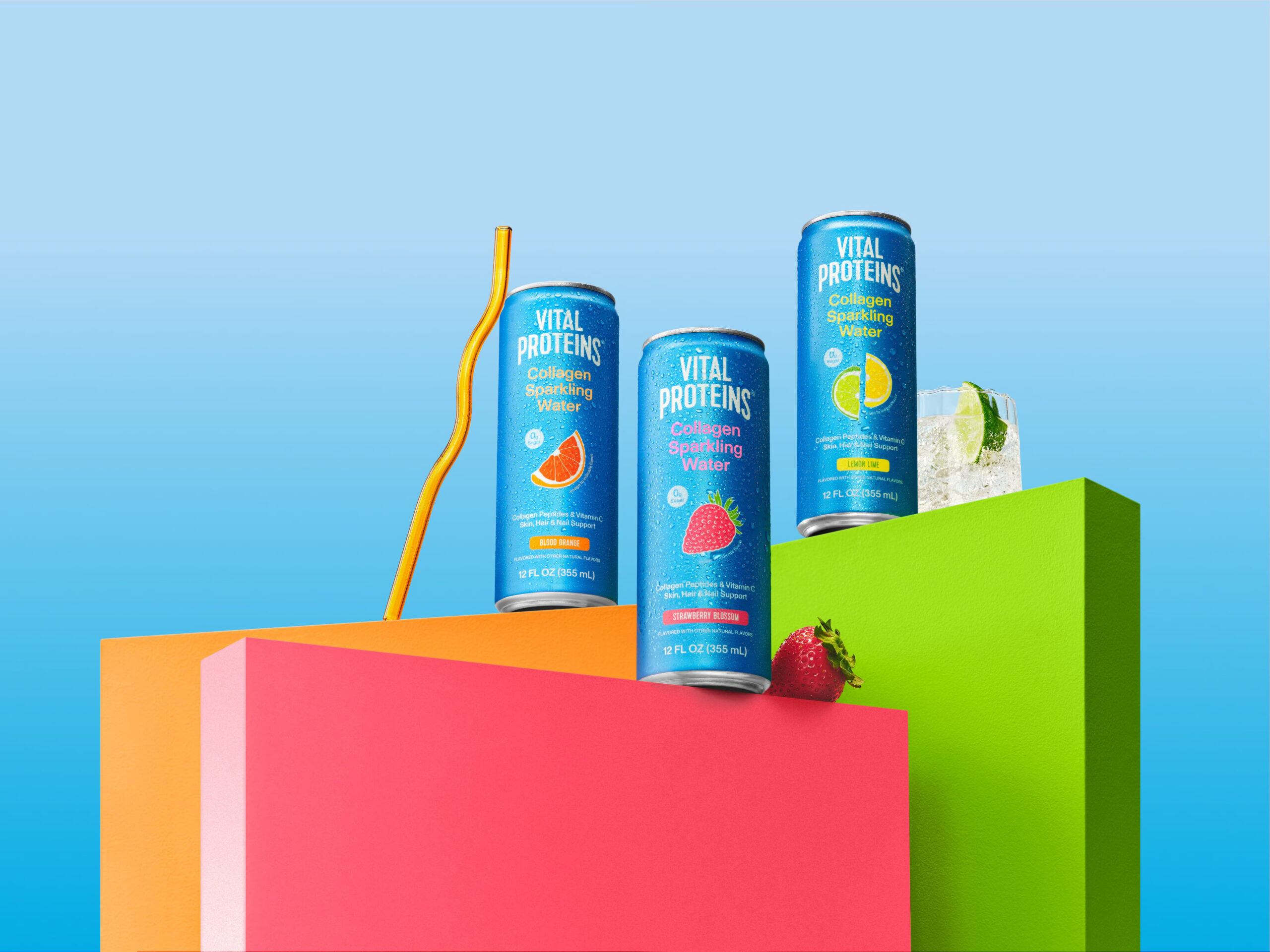
When Nestlé's Vital Proteins begins putting collagen into sparkling water, it signals more than a product launch. It marks the beginning of a structural redefinition of what protein nutrition is actually for — and who it is for.
The Signal in the Sparkling Water
Nestlé's Vital Proteins doesn't make product decisions lightly. The brand — acquired by Nestlé in 2019 and built into one of the world's leading collagen supplement platforms — has now moved collagen into one of the most mainstream, impulse-driven consumption formats in food and beverage: sparkling water. That single move carries significant strategic weight.
For years, collagen occupied a clearly defined and limited space: the wellness aisle, the beauty supplement shelf, the niche nutrition stack. Its users were predominantly women focused on skin elasticity and joint comfort, and its format was almost universally powders and capsules. The category had commercial credibility, but limited cultural reach. Vital Proteins' collagen sparkling water changes that positioning entirely. It places collagen in the hands of a mass-market, on-the-go consumer who may never have considered a supplement in their life — and it does so without requiring any behavioral shift, just a product swap.
Key Takeaways
- Collagen is the most abundant protein in the human body, forming connective tissues that are systematically underserved by the sports nutrition industry's historic focus on muscle.
- Nestlé's Vital Proteins is repositioning collagen from a niche supplement into a mainstream daily nutrition format, starting with sparkling water.
- The global collagen market is valued at approximately $9.8 billion and is growing at nearly 10% annually — driven by aging populations, active lifestyle demographics, and clean-label demand.
- For GCC food manufacturers, collagen-fortified functional beverages and foods represent an underexplored category with strong alignment to regional health and wellness macro-trends.
- The shift from "build muscle" to "maintain structural integrity" broadens the protein nutrition addressable market well beyond the traditional sports supplement consumer.
Two Protein Systems, One Overlooked
To understand why this market shift is structurally significant, it helps to understand the biology. The human body contains two fundamentally different protein systems, and the nutrition industry has spent decades obsessively serving only one of them.
The first system is the one every sports nutrition brand knows: contractile proteins, predominantly myosin and actin, which form skeletal muscle. These proteins respond to resistance training, are built with adequate dietary amino acids, and are commercially represented by an enormous whey protein complex — shakes, bars, RTDs, and gels. The logic is elegant: muscle is visible, hypertrophy is measurable, and transformation narratives sell.
The second system is collagen — the body's primary structural protein. Comprising roughly 30% of all protein in the human body, collagen is the foundational material of tendons, ligaments, cartilage, bone matrix, and skin. Where muscle generates force, connective tissues transmit, stabilize, and absorb it. Every athletic movement — from a sprint to a deadlift — depends on a functional collagen network to translate muscular output into safe, efficient mechanical action.
- Myosin & actin fibres
- Force generation
- Responds to resistance training
- Supported by: whey, casein, plant proteins
- Widely served by existing market
- Tendons, ligaments, cartilage, bone
- Force transmission & stabilization
- Declines with age from mid-20s
- Supported by: hydrolysed collagen peptides
- Historically underserved by nutrition
The critical commercial insight is this: collagen production in the body begins declining from approximately the mid-20s, and that decline accelerates meaningfully after 40. This means that the largest and fastest-growing consumer demographic in most markets — aging, active adults — has a documented, physiological need for collagen support that the mainstream nutrition industry has largely ignored in favour of appealing to younger, gym-focused consumers with muscle-building messaging.
Vital Proteins and the Format Innovation Thesis
Nestlé's strategic move through Vital Proteins is not simply about adding collagen to a new product format. It is about a deliberate attempt to collapse the distance between supplement and staple — to make collagen as habitual and unremarkable as drinking water.
This is a well-worn playbook in functional nutrition. Vitamins moved from pharmacy shelves to gummy formats. Probiotics moved from clinical settings to yoghurt drinks. Omega-3 moved from capsules to fortified bread. In each case, the technology reached mainstream scale not when the science improved, but when the delivery mechanism became invisible. Collagen sparkling water follows exactly this pattern — it removes the friction of supplementation entirely.
"Collagen is no longer a beauty supplement. It is becoming part of mainstream daily protein consumption — and that fundamentally changes who the customer is, what the product looks like, and how large the addressable market can be."
Saudi FoodTech — Editorial Analysis, June 2026For Nestlé, the strategic rationale is clear. The global collagen market, valued at approximately $9.8 billion in 2024, is projected to reach over $16 billion by 2030, growing at a compound annual rate of nearly 10%. The majority of that growth is expected to come not from supplements, but from food and beverage fortification — functional beverages, dairy products, protein bars, and confectionery. Brands that establish format leadership today will command disproportionate share as the category scales.
The MENA Opportunity: A Market Aligned with the Trend
For food manufacturers and brand builders across Saudi Arabia and the wider GCC, the collagen shift carries direct commercial relevance. The region's consumer landscape is already structurally aligned with the macro-trends driving collagen adoption globally.
First, the GCC has a rapidly growing health-conscious consumer segment that is actively moving beyond basic nutrition toward functional and preventive consumption. Saudi Arabia's Vision 2030 health targets, the UAE's Healthy Living Strategy, and broader regional investments in preventive healthcare are all creating an educated, receptive audience for products that support long-term structural health — precisely the proposition collagen supports.
Second, the region's dominant beverage categories — flavoured water, dairy beverages, and functional RTDs — are exactly the formats through which collagen has proven most commercially effective globally. Regional dairy players, beverage manufacturers, and private label producers have a clear and immediate opportunity to develop collagen-fortified SKUs that address an identified consumer need before international brands establish dominant shelf presence.
Third, the demographic profile is highly favourable. The Gulf's growing middle-income population, combined with a significant expatriate community with established supplement consumption habits, creates a broad and commercially accessible addressable market. Collagen's dual positioning — sports recovery for active adults, joint and skin health for older consumers — allows a single SKU strategy to speak to multiple consumer segments simultaneously.
"WWe are seeing a fundamental broadening of the sports nutrition consumer. People who exercise regularly but don't identify as athletes are now the most commercially significant growth segment — and collagen is the ingredient that speaks directly to their recovery and longevity priorities, not just their performance goals."
Formulation and Regulatory Considerations
For brands considering entry into the collagen-fortified food and beverage space, formulation quality is the primary determinant of product efficacy and consumer trust. Not all collagen is equivalent, and the commercial distinction between types is commercially meaningful.
Type I collagen — the most abundant in the body — is associated with skin, bone, and tendon health, and is typically derived from bovine or marine sources. Type II collagen is more concentrated in cartilage and is often linked to joint health applications. Hydrolysed collagen peptides, which have been processed into shorter amino acid chains for improved bioavailability, are the format most commonly used in functional food and beverage products.
In the GCC context, halal certification is a non-negotiable requirement. The dominant source of collagen in global supply chains has historically been porcine (pork-derived), which is categorically incompatible with halal certification. However, the halal-certified collagen market — drawing primarily on bovine and marine sources — has grown substantially in recent years to meet this demand, with major suppliers including Gelita, Rousselot, and Darling Ingredients now offering certified options with full halal chain-of-custody documentation. Marine collagen, derived from fish, represents a growing and fully halal-compatible option that also carries clean-label and sustainability credentials.
What This Means for the Protein Nutrition Market Structure
The collagen transition is not simply a new ingredient trend — it represents a structural expansion of what the protein nutrition market is. For the past two decades, that market has been defined primarily by sports performance: whey protein isolates, BCAAs, creatine, and recovery formulations targeted at a demographically narrow gym-going audience. The collagen shift expands the market's conceptual territory to include structural health, longevity, joint function, and skin integrity — concerns shared by a dramatically larger population.
This expansion has important implications for how brands position, distribute, and price collagen products. The sports nutrition channel — specialty health stores, gym point-of-sale, direct-to-consumer supplements — will remain relevant, but the primary growth vector will be mainstream retail: supermarkets, convenience, foodservice, and e-commerce. Products that succeed in the collagen category will be those that integrate seamlessly into daily consumption habits, deliver a measurable sensory experience, and communicate benefit claims clearly enough to drive repeat purchase without requiring clinical-level consumer education.
For investors and strategists, this also reshapes the competitive landscape. The collagen beverage category is currently fragmented, with no single dominant player across global markets. First-mover brand equity in the GCC collagen beverage space remains largely unclaimed — a relatively rare condition in an otherwise competitive regional functional food market.
Editorial View
Vital Proteins' move into sparkling water is a small product decision with large strategic implications. It confirms that collagen has cleared the credibility threshold required for mass-market deployment — that the ingredient science is robust enough, the consumer awareness sufficient, and the demand signal clear enough to justify mainstream format investment by one of the world's most rigorous food and beverage operators.
For the MENA food and beverage industry, the message is actionable: the collagen category is not a niche to observe from a distance — it is a growth segment with validated consumer demand, available halal-certified supply, and an open competitive landscape. Brands that move with conviction in the next 18 to 24 months stand to establish category leadership positions that will be structurally difficult to displace as international players arrive with scale and marketing spend.
The protein story is no longer just about muscles. It is about the entire structural architecture of the body — and the food industry is only beginning to build products that reflect that reality.