

Tofu Tops a New Protein Ranking That Scores Health and Climate Together
A Cambridge researcher scored 20 protein sources on nutrition, cost and environmental footprint in a single index. Plant-based foods swept the top fifth, animal foods the bottom fifth — and the result lands directly on the category Saudi Arabia imports most.
What the Score Actually Measures
A new composite index published in Frontiers in Sustainable Food Systems ranks 20 high-protein foods on two axes at the same time. The BPI Score — developed by Dr Chris Macdonald, a behavioural scientist at the University of Cambridge and director of the Better Protein Institute — awards each food up to 40 points: 24 for "People" and 16 for "Planet."
The People side covers nutritional composition (saturated fat, sodium, cholesterol), whether the food delivers all nine essential amino acids, and how affordable and accessible it is at retail. The Planet side covers greenhouse gas emissions, land use, freshwater use and water pollution per 100g of protein. The methodological argument is the combination itself: single-axis ratings, Macdonald writes, can "conceal critical tradeoffs" — a food that looks efficient on grams of protein per calorie may look very different once land and water are priced in.
Key Takeaways
- Tofu scored 36 of 40 — winning both categories outright, including a maximum 16/16 on environmental impact. Cheddar finished last at 13.
- Every food in the top 20% was plant-based (tofu, chia seeds, beans, quinoa); every food in the bottom 20% was animal-based (mozzarella, lamb, beef, cheddar).
- The spread is widest on environment and narrowest on price: lentils were the cheapest source assessed, quinoa the most expensive — both plant-based.
- Animal sources won on completeness: all were complete proteins, while most plant sources were flagged incomplete — the single strongest counterweight in the data.
- For Saudi Arabia, the categories scored lowest are the categories with the lowest self-sufficiency: red meat sat at 62% in 2024, against 131% for dairy.
A Clean Split by Product Type
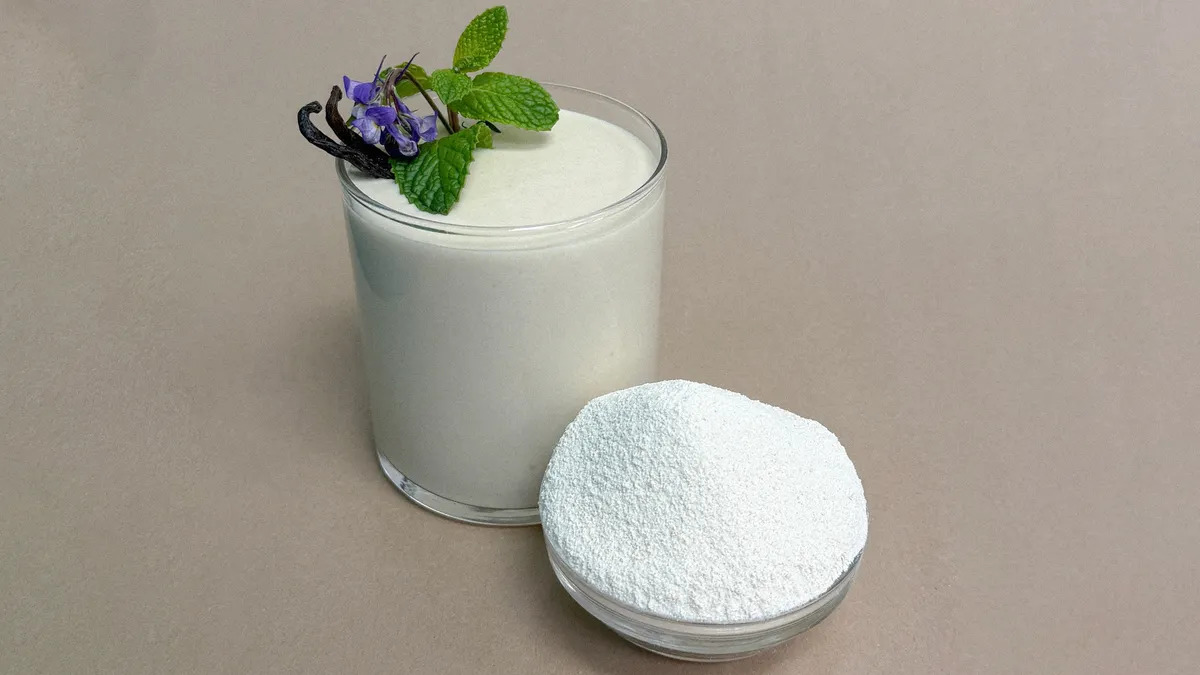
Tofu took the top position with 20 of 24 on the People score and a perfect Planet score. Chia seeds, beans and quinoa completed the top four. At the other end, in order: mozzarella, lamb, beef, cheddar. Lamb recorded the weakest People score at 10; beef the weakest Planet score, at a single point out of 16.
Some gaps run to orders of magnitude. Producing 100g of protein from tofu was associated with roughly 0.61kg of CO₂-equivalent emissions, against 64.19kg for beef. Land use showed the same pattern: about 2.16m² for tofu versus 211.38m² for beef. Those are the numbers doing most of the work in the final ranking.
| Rank | Source | Type | Score |
|---|---|---|---|
| 1 | Tofu | Plant | 36 |
| 2 | Chia seeds | Plant | — |
| 3 | Beans | Plant | — |
| 4 | Quinoa | Plant | — |
| 17 | Mozzarella | Animal | — |
| 18 | Lamb | Animal | — |
| 19 | Beef | Animal | — |
| 20 | Cheddar | Animal | 13 |
The finding that matters commercially is not that tofu won. It is that price and amino-acid completeness — the two variables industry competes on — were the only places the gap narrowed.
SFT Editorial Analysis — Saudi FoodTechWhy It Reads Differently in the Gulf
In most markets this is a consumer-choice story. In Saudi Arabia it is closer to a supply story. GASTAT's food security data put red meat self-sufficiency at 62% in 2024 and poultry at 72%, while dairy ran a surplus at 131%. The protein categories the BPI Score penalises hardest are, broadly, the categories the Kingdom still covers through imports — which means the health argument and the trade-balance argument point the same way, a rare alignment.
Water sharpens it further. The Ministry of Environment, Water and Agriculture reports non-renewable water use down 52% against 2016 through modern irrigation. In a system where water is the binding constraint on domestic output, protein sources are effectively competing on litres per gram — the exact variable the Planet score isolates.
The commercial base is still small. The Middle East plant protein market is estimated at roughly USD 1.02 billion in 2026, projected near USD 1.39 billion by 2031 — and Saudi Arabia imports an estimated 95%-plus of its soy protein ingredient requirement. The constraint is processing capacity, not demand signal.
Read the Caveats Carefully
This is the first published version of the score, and the weighting itself — 24 points to People, 16 to Planet — is an authored judgement that the wider nutrition-science community has not yet replicated or stress-tested. Animal welfare is not factored in. Mycoprotein and other fermentation-derived proteins were excluded, though the author notes they would likely score well. And affordability was priced against UK supermarket data, which does not transfer cleanly to Gulf retail, where import structure, not farmgate cost, sets the shelf price.
Editorial View
The specific rankings will be argued over; the format is the durable part. Multi-axis scoring moves protein comparison out of the nutrition panel and into the same frame as sourcing, water and land — the frame regulators and institutional buyers are already using. For Saudi and wider MENA manufacturers, the question is not whether tofu beat beef in a UK-priced index. It is whether their protein portfolio holds up when a customer applies a composite score to it, and where the local supply chain would need to sit to pass.