

Nestlé's Week of Reckoning:
Growth, Governance, and the Gaps Between
Earnings, an acquisition, a sustainability report, two regulatory raids, a fine, and an institutional divestiture — all in one week. The world's largest food company is navigating a convergence it can no longer manage as separate storylines.
The Week That Was
Nestlé rarely has quiet weeks. But the seven days ending in early June 2026 compressed an unusual density of signal into a single news cycle: a Q1 earnings release, a closed acquisition, an inaugural sustainability report, a French anti-fraud raid, a Greek consumer protection fine, and the public disclosure of a major institutional divestiture. None of these events was independent. Together, they expose the fault lines running beneath the world's largest food company.
For food-industry operators and investors tracking the MENA region, the Nestlé situation is instructive beyond its Swiss specifics. The pressures bearing down on the company — investor governance scrutiny, recall-driven earnings drag, portfolio rationalization pressure, and regulatory accumulation — are not unique to Nestlé. They represent the emerging operating environment for every major food group with global ambitions.
Key Takeaways
- Q1 2026 organic growth of 3.5% was partially offset by the January infant formula recall; reported sales declined 5.7% year-on-year on a 9.3% foreign exchange headwind.
- Nestlé completed its full acquisition of yfood Labs — a German complete-nutrition RTD brand — at a valuation of approximately $523 million, its first deal under new CEO Philipp Navratil.
- UK pension fund Railpen, managing around £34 billion, divested its entire Nestlé holding, citing governance concerns, share price underperformance, and the company's exit from the Dairy Methane Action Alliance.
- Nestlé published its inaugural Dairy Plan report the same week, claiming a 26% greenhouse gas reduction across its dairy supply chain since 2018 — but the timing landed awkwardly against the Railpen disclosure.
- French anti-fraud officers raided two Perrier sites in May 2026 as part of an ongoing criminal fraud probe into mineral water treatment practices.
- The convergence is the real story: recalls, investor exits, regulatory probes, portfolio acquisitions, and sustainability reporting are no longer separate tracks — they are the same underlying challenge.
Earnings: Growth With an Asterisk
Nestlé's Q1 2026 results presented a company in a process of genuine, if uneven, recovery. Organic growth of 3.5% was driven by improving volumes across key categories, with Coffee and Food & Snacks leading the momentum. CEO Philipp Navratil — who took the role in September 2025 — described the results as demonstrating that the company's real-internal-growth-led strategy was delivering, with strong performance across most zones and categories.
The headline, however, came with caveats. Reported sales of approximately CHF 21.3 billion (roughly $27.1 billion) represented a 5.7% decline year-on-year, with a 9.3% foreign exchange headwind erasing the underlying operational gains. Greater China remained a structural problem, posting a 10.6% decline on real internal growth — a continuation of a demand-side contraction that has persisted across the company's most strategically important emerging market. And organic growth itself was dragged by nearly a full percentage point from the fallout of Nestlé's January 2026 infant formula recall, which disrupted one of the company's highest-margin categories.
"-Our first-quarter performance demonstrates that our RIG-led growth strategy is delivering. Results were strong across most zones and categories, particularly in Coffee and Food & Snacks. Growth in emerging markets stood out."
The yfood Acquisition: A Strategic Signal
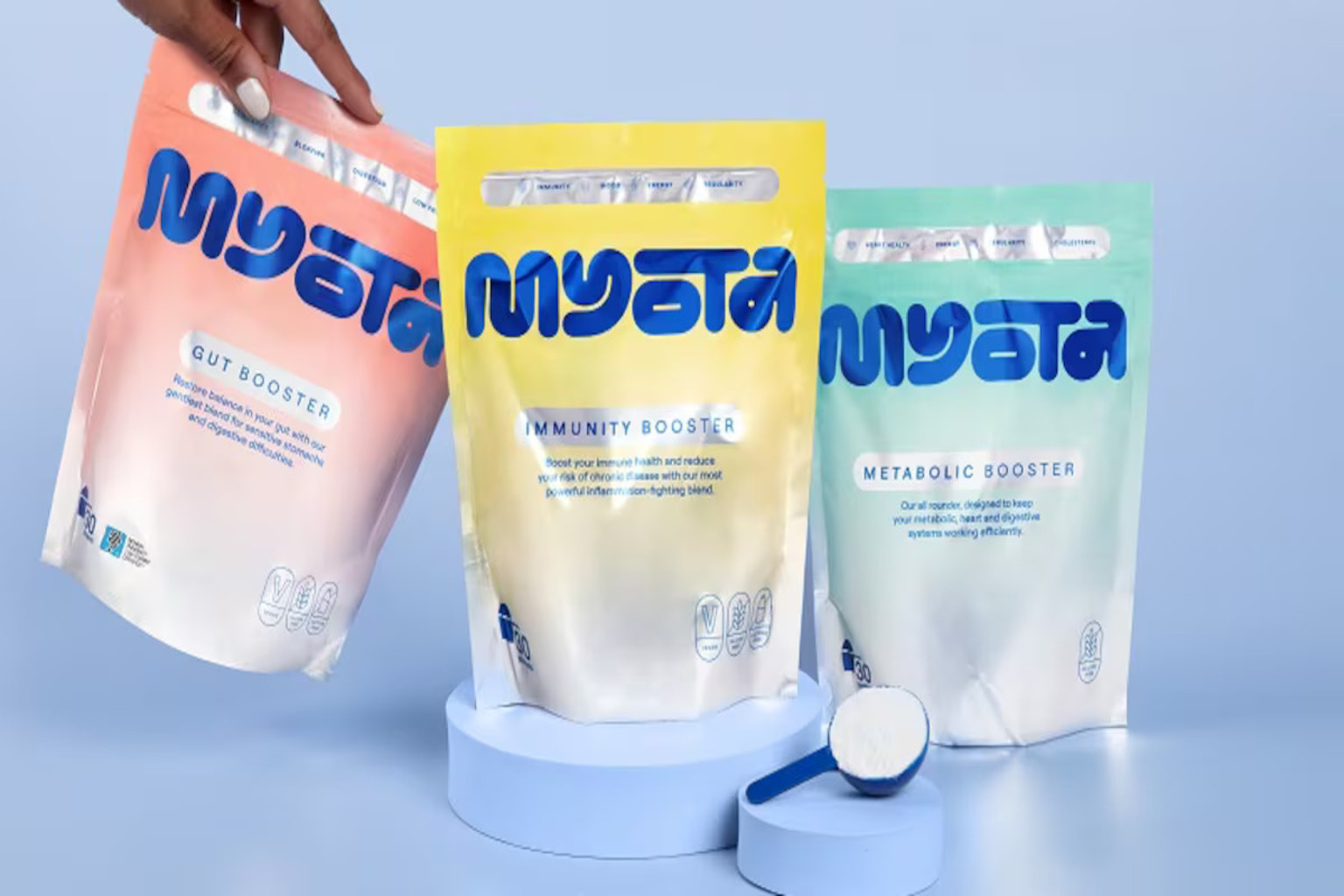
Amid the earnings noise, Nestlé closed the most consequential move of its new CEO's tenure: the full acquisition of yfood Labs GmbH, the Munich-based complete-nutrition RTD brand, in a transaction that valued the company at approximately $523 million. Nestlé had held a 49% stake in yfood since 2023; acquiring the remaining shares from founders Benjamin Kremer and Noel Bollmann completes a transition three years in the making.
yfood is not a conventional meal replacement brand. The company has deliberately positioned its products — liquid meals, powders, and bars — around the concept of "smart food": nutritionally complete profiles containing all 26 essential vitamins and minerals, up to 34g of protein, a low glycaemic index, and options across dairy and vegan formats. In 2025, yfood generated approximately EUR 150 million ($174 million) in sales across 30 European markets and more than 50,000 points of sale, with double-digit year-on-year growth.
The strategic logic is multi-layered. The acquisition strengthens Nestlé's newly formed Nutrition division — which integrates its Health Science unit — at a moment when the convenience nutrition category is rapidly gaining commercial relevance, partly driven by the expanding use of GLP-1 medications among consumers who require nutrient-dense, lower-calorie formats. It also positions Nestlé alongside Danone, which acquired UK-based Huel for a reported $1.2 billion in March 2026, in what is becoming a direct institutional competition for the functional meal category.
"We are handing over yfood at the exact moment the brand is ready for the world — and to the partner who can take it there."
Benjamin Kremer — Co-Founder & CEO, yfood LabsFor Nestlé, the next phase involves internationalizing yfood beyond its European stronghold. The brand's integration into Nestlé's global distribution infrastructure — and its adjacency to existing platforms like Boost and Vital — provides the leverage for that expansion. Navratil also confirmed plans to invest an additional CHF 600 million ($763 million) in advertising and promotional activities in 2026, funded by efficiency savings, with growth platforms like yfood a primary target.
Railpen Exits: The Governance Signal Investors Cannot Ignore
The most consequential development of the week may not have come from Nestlé's own communications at all. Railpen, the pension manager for the UK's Railways Pension Scheme with approximately £34 billion under management, disclosed in its latest Stewardship Report that it had divested its entire Nestlé holding. The reasons were direct: share price underperformance of more than 30% over five years, limited responsiveness to investor feedback, concerns about governance stability, and the management of material ESG risks — specifically, Nestlé's quiet withdrawal from the Dairy Methane Action Alliance in late 2025.
Railpen's statement that it observed "limited responsiveness to investor feedback and limited progress against the areas we had highlighted" is the institutional equivalent of a lost confidence vote. The fund joins a growing list of long-term institutional holders reconsidering Nestlé's governance profile after years in which the company has undergone CEO transitions, strategic pivots, and regulatory controversies without delivering commensurate shareholder returns.
Nestlé's departure from the Dairy Methane Action Alliance — a coalition launched in December 2023 whose members include Danone, Kraft Heinz and Starbucks, and which requires participants to publicly measure and disclose methane emissions from dairy supply chains — was framed by the company as a routine review of external memberships. Investors read it differently: as a retreat from voluntary climate accountability at precisely the moment regulatory and investor scrutiny of Scope 3 agricultural emissions is intensifying.
"We observed limited responsiveness to investor feedback and limited progress against the areas we had highlighted."
Railpen — UK Railways Pension Scheme Stewardship Report, June 2026The Dairy Plan: Right Data, Wrong Timing
The release of Nestlé's inaugural Dairy Plan report in the same week as the Railpen divestiture disclosure was, charitably, a communications misalignment. The report documents a 26% reduction in greenhouse gas emissions across Nestlé's global dairy supply chain since its 2018 baseline — alongside a 25% reduction in methane specifically — through a programme engaging more than 130,000 dairy farmers, over 200 suppliers, and partners in more than 40 countries. Regenerative agriculture practices have been adopted on more than 34% of Nestlé's dairy sourcing in 2025.
On the merits, the Dairy Plan report is substantive. Nestlé's Chief Sustainability Officer Antonia Wanner positioned it as embodying "Creating Shared Value: supporting supply continuity, mitigating risk, and delivering benefits to stakeholders." But the optics of publishing a dairy emissions report in the same news cycle as an institutional divestiture citing ESG governance failures raises questions that the data alone cannot resolve: namely, whether Nestlé's sustainability reporting is leading or trailing its actual institutional credibility on climate.
The disconnect matters because CSRD compliance — the EU Corporate Sustainability Reporting Directive — is progressively expanding mandatory Scope 3 disclosure requirements to non-EU companies operating in the EU above the revenue threshold. Nestlé will not escape the reporting obligation. The question investors are increasingly asking is whether disclosed data, absent the accountability mechanisms of collective industry initiatives, is sufficient to rebuild institutional confidence.
Regulatory Accumulation: Perrier, Greece, and the Pile on Nestlé's Desk
Two older regulatory wounds reopened during the week. In France, anti-fraud officers from the DGCCRF raided Nestlé's Perrier bottling plant in Vergèze and a laboratory in the Vosges mountains on May 19, 2026, as part of a criminal consumer fraud investigation into the company's alleged use of prohibited purification treatments on mineral water — treatments that, under EU and French law, are incompatible with the "natural mineral water" labelling designation. The raids followed an earlier complaint by consumer group Foodwatch to the Paris prosecutor and came nearly a year after raids on Nestlé's Paris headquarters in July 2025.
The Perrier investigation is not new. Nestlé Waters acknowledged in 2024 that it had used activated carbon filters, ultraviolet treatment, and microfiltration on products labelled as natural mineral water and agreed to pay a €2 million fine under a Public Interest Judicial Agreement (CJIP) to avoid prosecution. A French Senate inquiry published in May 2025 went further, concluding that the French government had been aware of the practices since at least 2022 — and that a "deliberate strategy" of concealment had been adopted. The 2026 raids signal that criminal investigators are not treating the administrative settlement as sufficient closure.
Separately, Greek consumer protection authorities issued a price-gouging fine against Nestlé tied to pricing conduct during the recent European inflation cycle — adding another jurisdiction to the company's regulatory exposure docket. While neither individual case is existentially threatening for a company of Nestlé's scale, their accumulation reflects a pattern of regulatory vulnerability that complicates the trust-rebuilding narrative the new CEO is attempting to establish.
Portfolio Under Review: Dairy, Beverages, and What Comes Next
Beneath the week's acute events, Nestlé's structural portfolio debate continues. The company has made clear that its strategic architecture now centres on four core pillars: Coffee, Petcare, Nutrition, and Food & Snacks. Dairy and powdered beverages are explicitly identified as categories under review for divestiture or partial divestiture. Nestlé Waters — the division that houses Perrier, Vittel, S.Pellegrino, and Acqua Panna — is already in active engagement with potential partners following a formal process launched in Q1 2026, with deconsolidation expected by 2027.
For a company that once prided itself on the breadth and permanence of its brand portfolio, the pace of portfolio reduction is striking. Brand rationalization in Food & Snacks is ongoing — including the advanced sale of the remaining ice cream business to Froneri — and the logic is consistent: focus capital, R&D bandwidth, and management attention on categories where Nestlé can sustain a structural leadership position rather than maintain dilutive scale.
The yfood acquisition fits this framework directly. Rather than defending legacy positions in commoditizing categories, Nestlé is deploying capital into functional nutrition challengers with demonstrated growth trajectories and clear alignment with the GLP-1 and health-conscious consumer segments that are redefining what premium food looks like in 2026.
Why This Matters for Saudi Arabia and MENA
Nestlé is not an abstract case study for the MENA region. The company generates significant revenue across the Gulf and wider Middle East through categories including Nescafé, Milo, infant nutrition products, Maggi culinary brands, and its water portfolio — all of which are present across Saudi Arabia's consumer market and are embedded in the country's food import supply chain.
The strategic decisions being made at Nestlé's Vevey headquarters ripple through to regional distributors, retail buyers, and food manufacturers that rely on Nestlé's branded inputs and formulation systems. Portfolio exits from dairy and powdered beverages, for instance, could affect supplier relationships and shelf-space dynamics in Gulf markets where those categories carry significant consumer penetration. A repositioned, nutrition-focused Nestlé may also show up differently in MENA expansion strategies — more aggressive investment in premium health and functional formats, less competitive intensity in legacy ambient beverage categories.
More broadly, the governance and ESG pressures bearing down on Nestlé are a preview of what Saudi-listed and GCC-headquartered food companies will face as international capital markets increasingly price ESG risk into food sector valuations. As Vision 2030 drives domestic food company listings and cross-border investment partnerships, governance transparency, sustainability reporting, and supply chain accountability will become not soft credentials but commercial prerequisites for accessing institutional capital.
Editorial View
Nestlé's week is significant precisely because it refuses to resolve cleanly into either a good-news or a bad-news story. The earnings are real but qualified. The yfood deal is strategically coherent but must now deliver across new markets. The Dairy Plan data is substantive but arrived at the worst possible moment for institutional perception. The regulatory issues are manageable but recurring. The Railpen divestiture is pointed but not yet systemic.
What the week reveals, above all, is that the traditional separation between a food company's operational performance, its governance conduct, its ESG commitments, and its regulatory standing has collapsed. These are no longer parallel storylines that investor relations can manage sequentially. They are a single, interconnected credibility signal — and the market is reading all of it simultaneously. For the world's largest food company, that integration is the challenge that defines the Navratil era.